China Unveils First Humanoid National-Standard Certification List: 12 Companies, 23 Models Pass
China Quality Certification Centre and the China Robot Industry Alliance published the first national-standard conformity certification list for humanoid robots on November 19, 2026. Twelve companies and 23 models passed out of 37 applicants, covering Unitree, AgiBot, UBTech, XPeng, Fourier and Galbot. Certification is voluntary for now but is expected to become a prerequisite for government and state-owned enterprise procurement.
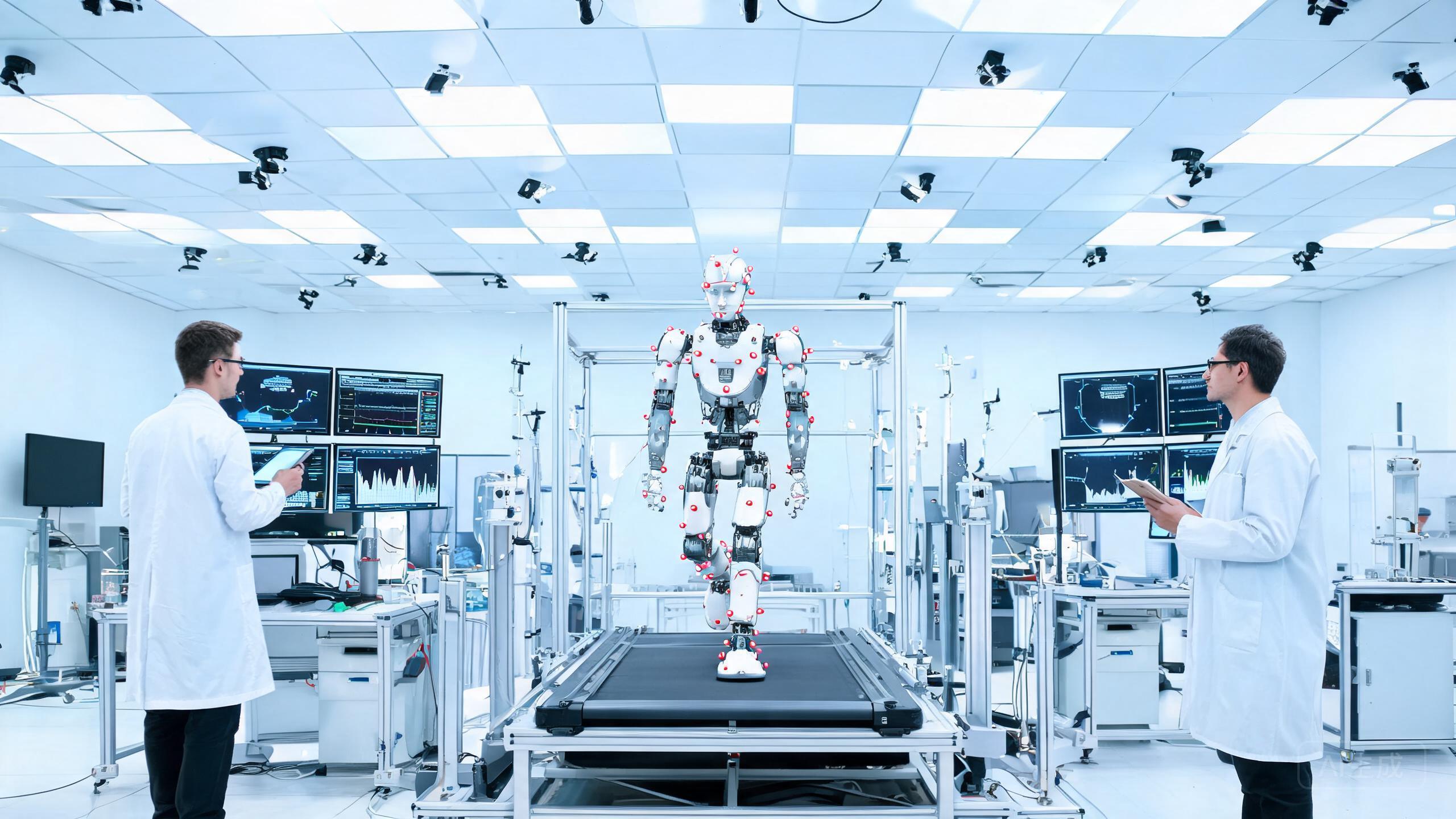
China Quality Certification Centre (CQC) and the China Robot Industry Alliance on November 19, 2026 released the country's first conformity certification list for humanoid robots under the six national standards published on October 31. Of 37 models submitted by 21 companies, 23 models from 12 companies passed. The certified list includes Unitree's H2 Plus and G1+, AgiBot's A3 and A2, UBTech's Walker S2, XPeng's IRON, Fourier's GR-3 and Galbot's ET1.
The certification is voluntary and does not take effect as a legal requirement until the standards become mandatory on April 1, 2027. But the tests are the first uniform benchmark the industry has had. Robots were evaluated on dynamic balance and fall recovery, emergency-stop response within 0.5 seconds, continuous operation of at least four hours, repeat positioning accuracy of ±0.5 mm, noise, and data-security handling. Fourteen models failed, according to people involved in the process.
Failures clustered around two issues rather than basic capability. Eight models exceeded the emergency-stop time limit, typically because software latency was measured end-to-end rather than at the controller. Six failed slope-walking stability tests at 10 degrees, a scenario common in older factories but rarely exercised in showroom demos. CQC said it will publish anonymized failure categories so that manufacturers can target fixes before the mandatory date.
The list is likely to matter more in procurement than in marketing. Beijing, Shanghai and Shenzhen have all indicated that government-funded purchases and state-owned enterprise tenders will require certification after April 2027. That gives certified vendors a head start in the segment that drove much of China's early humanoid demand — museums, exhibition halls, utilities and local government service projects — while export customers in Europe are already asking for equivalent evidence.
Certification is valid for three years with annual audits, and CQC plans to add tests for multi-robot coordination and human-robot collaboration in 2027. Industry groups welcomed the list but noted that passing a standard is not the same as being useful: the six GB/T standards cover safety, terminology and performance measurement, not task capability. The next phase, several executives said privately, will be judged by deployment data rather than certificates.
A certificate tells a procurement officer the robot will not hurt anyone. It does not tell them the robot will do the job — that is the next fight.
— 行业评论 / 中国质量认证中心
Related Robot
GR-3
Fourier
Related News
 上海市民政局 / 傅利叶智能
Shanghai Deploys 600 Care Humanoids Across 30 Nursing Homes in Largest Elderly-Care Rollout
Shanghai's civil affairs bureau began rolling out 600 care-focused humanoid robots to 30 nursing homes on November 23, 2026, using Fourier GR-3 and UBTech U1 units. The robots handle night patrols, repositioning assistance, medication reminders and fall detection. The government subsidizes 60% of the cost, and all units are insured under the new humanoid liability policy.
 平安产险 / 中国人保 / 中国保险行业协会
China's First Humanoid Robot Liability Insurance Launches, Covering Up to ¥50 Million
Ping An Property & Casualty and PICC jointly launched China's first comprehensive liability insurance product for humanoid robots on November 22, 2026, with coverage up to ¥50 million per incident and annual premiums of roughly ¥4,000–9,000 per unit. A dozen companies insured about 8,000 robots on the first day. Certification under the new national standards and continuous safety-log access are required.
 财联社 / 36氪 / The Information
Meta Builds 'Max' Humanoid Prototype in Three Months with China's Fourier — Plans to Ship Second Gen by Year-End
On November 1, 2026, reports confirmed Meta collaborated with China's Fourier Robotics to build a humanoid prototype codenamed 'Max' in approximately three months. Weighing 48 kg, 1.5 m tall, and powered by NVIDIA Jetson Thor, the machine is Meta's first physical embodiment of its Muse AI agent, with voice recognition up to five meters and built-in speakers for natural communication. A second-generation prototype (Max 2) entered development in September 2026. Meta's robotics VP Li-Chen Miller reportedly spent two months on-site at Fourier's Shanghai factory.