Xinye Robotics Launches Bubbo 1 — China's First Embodied Home Agent Optimized for Emotional Companionship
On October 30, 2026, Xinye Robotics launched Bubbo 1 — an embodied home agent designed explicitly for emotional companionship with children and elderly users. Standing 65 cm tall in a plush pink form, it packs 13 categories of 26 sensors, six degrees of freedom, and two expression screens. Rather than chase bipedal humanoid mimicry, Bubbo trades 'likeness' for 'affinity': a plush exterior, 2–3-year-old child-height perspective for family photos, and a conversational model that simulates natural emotional flow instead of rigid Q&A. Xinye also launched Bubbo OS, the underlying partner-interaction platform.

While China's humanoid robot makers race toward industrial deployment, a quiet sub-segment is shaping up: embodied agents built for the home, not the factory. Xinye Robotics made its mark on October 30 by launching Bubbo 1, the first Chinese embodied home agent explicitly optimized for emotional companionship — a bet that children and elderly users want warmth before they want utility.
Bubbo 1 deliberately rejects the bipedal humanoid template. Standing 65 cm tall (the height of a 2–3-year-old child) and wrapped in soft pink plush, it carries 13 categories of 26 sensors — more than any home-oriented robot in China — plus six degrees of freedom, two expression screens, autonomous navigation, auto-charging, camera-based heart-rate detection, and Bluetooth pairing with smart rings for shared emotional data. The interface is Bubbo OS, a partner-oriented interaction model that listens patiently, pauses before responding, and goes quiet when the user needs calm — no scripted Q&A loops, no forced cheerfulness.
Founder Ren Yongliang argued the strategic inversion: 'In industrial scenes, we optimize for safety. In family scenes, we optimize for trust.' A bipedal humanoid in the living room can look intimidating to children or sterile to the elderly; a plush 65 cm agent is huggable, photographable, and non-threatening. Xinye's founding insight was that embodied AI for the home is not a miniaturized factory worker — it is a new category entirely.
The launch landed weeks after UBTech's Walker S2 had begun shipping to high-net-worth Chinese families and AgiBot's A3 Ultra proved 97% task success in Wuhan's riverside retail. Bubbo 1's different strategy shows the home market is already fragmenting: high-end humanoids for demonstration, commercial-grade humanoids for real work, and now plush emotional agents for the softest use case. All three are shipping, all three are profitable, and none is built on the same platform.
Whether Bubbo 1 catches on depends on one thing Xinye can no longer control: whether Chinese families will pay recurring subscription fees for emotional companionship. Industrial humanoids justify ROI through labor cost savings; home agents justify value through subjective experience. Xinye's move — launching first, collecting user data early, and betting on the soft side of embodied AI — is the kind of strategic bet the hardware-heavy Chinese robotics ecosystem rarely takes. If Bubbo 1 works, it could be the Trojan horse that opens a household market nobody expected to open this fast.
In industrial scenes we optimize for safety. In family scenes we optimize for trust.
— 任永亮,心言机器人创始人 / 澎湃新闻
Related Robot
Agibot A3
Agibot
Related News
 工业和信息化部
China's MIIT Issues 2027–2029 Humanoid Robot Action Plan, Targeting 500,000 Units a Year
The Ministry of Industry and Information Technology published a three-year action plan for humanoid robots on November 23, 2026, covering 2027–2029. Targets include annual output of 500,000 units, an industry scale of ¥300 billion, 85% localization of core components, three to five globally competitive platform companies, and at least 100 demonstration projects each in automotive, electronics, logistics and elderly care.
 香港交易所 / 智元机器人招股书
AgiBot Files for Hong Kong IPO to Raise $1.5 Billion, Targeting a ~HK$100 Billion Valuation
AgiBot submitted a listing application to the Hong Kong Stock Exchange on November 17, 2026, seeking to raise about $1.5 billion at a targeted valuation of roughly HK$100 billion. The filing discloses ¥4.7 billion in revenue for the first nine months of 2026, a net loss of ¥1.1 billion, and cumulative humanoid production of more than 20,000 units, making it the largest humanoid IPO attempt after Unitree and Agility.
 高工机器人 GGII / 产业调研
China's October Humanoid Output Hits 23,600 Units — GGII Raises Full-Year 2026 Forecast to 150,000
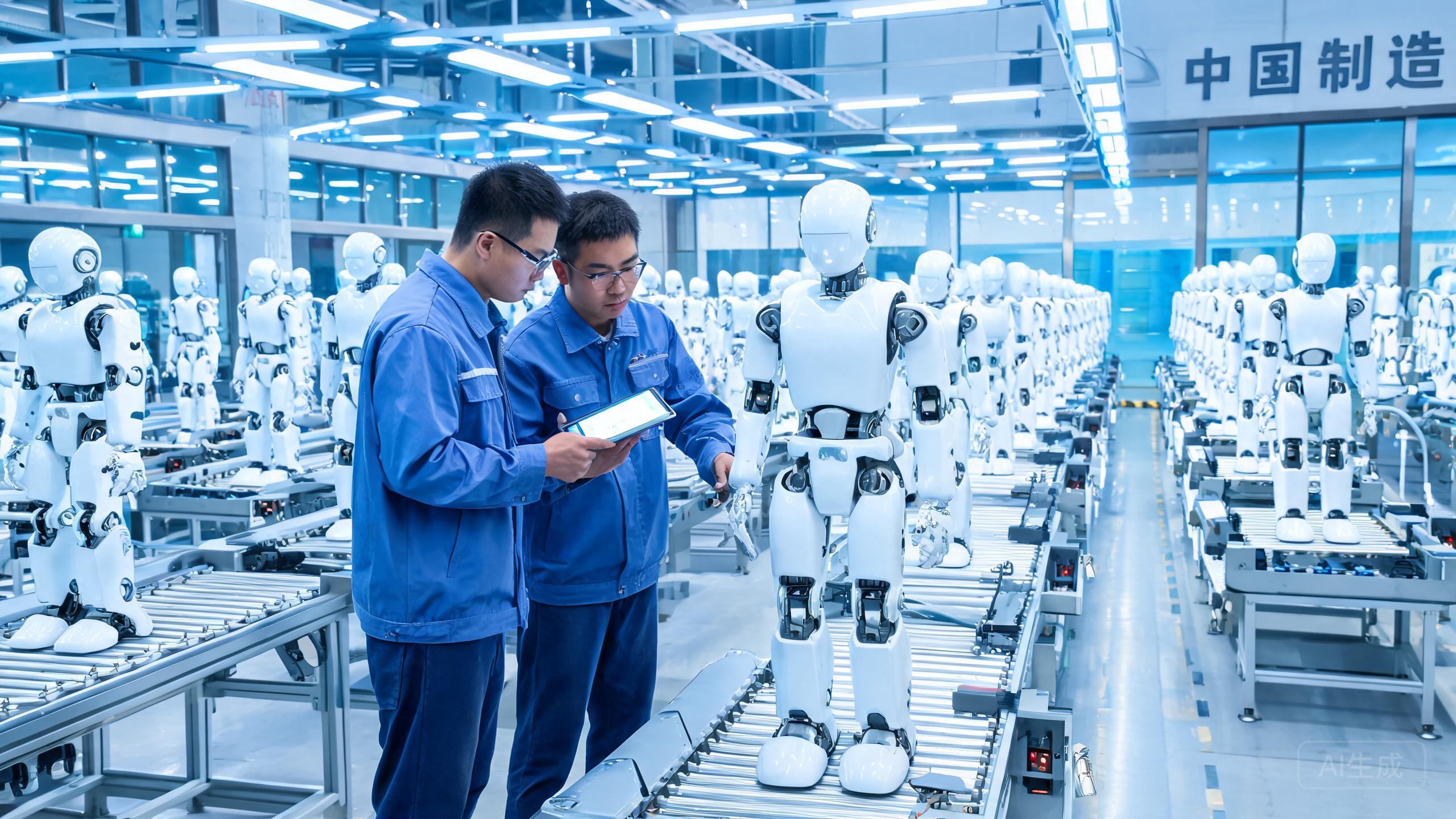
GGII data released on November 12, 2026 shows China produced 23,600 humanoid robots in October, up 18.4% month-on-month, bringing January–October output to 114,000 units. The research firm raised its full-year 2026 forecast from 100,000 to 150,000 units — its third upward revision this year — as average selling prices fell to ¥180,000 and Chinese makers held roughly 93% of global shipments.