Tesla Optimus Gen 3 humanoid Robot Handles Battery Logistics at Gigafactory
Tesla has deployed its latest Optimus Generation 3 humanoid robots at the Gigafactory to autonomously handle and transport battery cells, marking a significant milestone in fully unmanned intralogistics and assembly-line support operations.
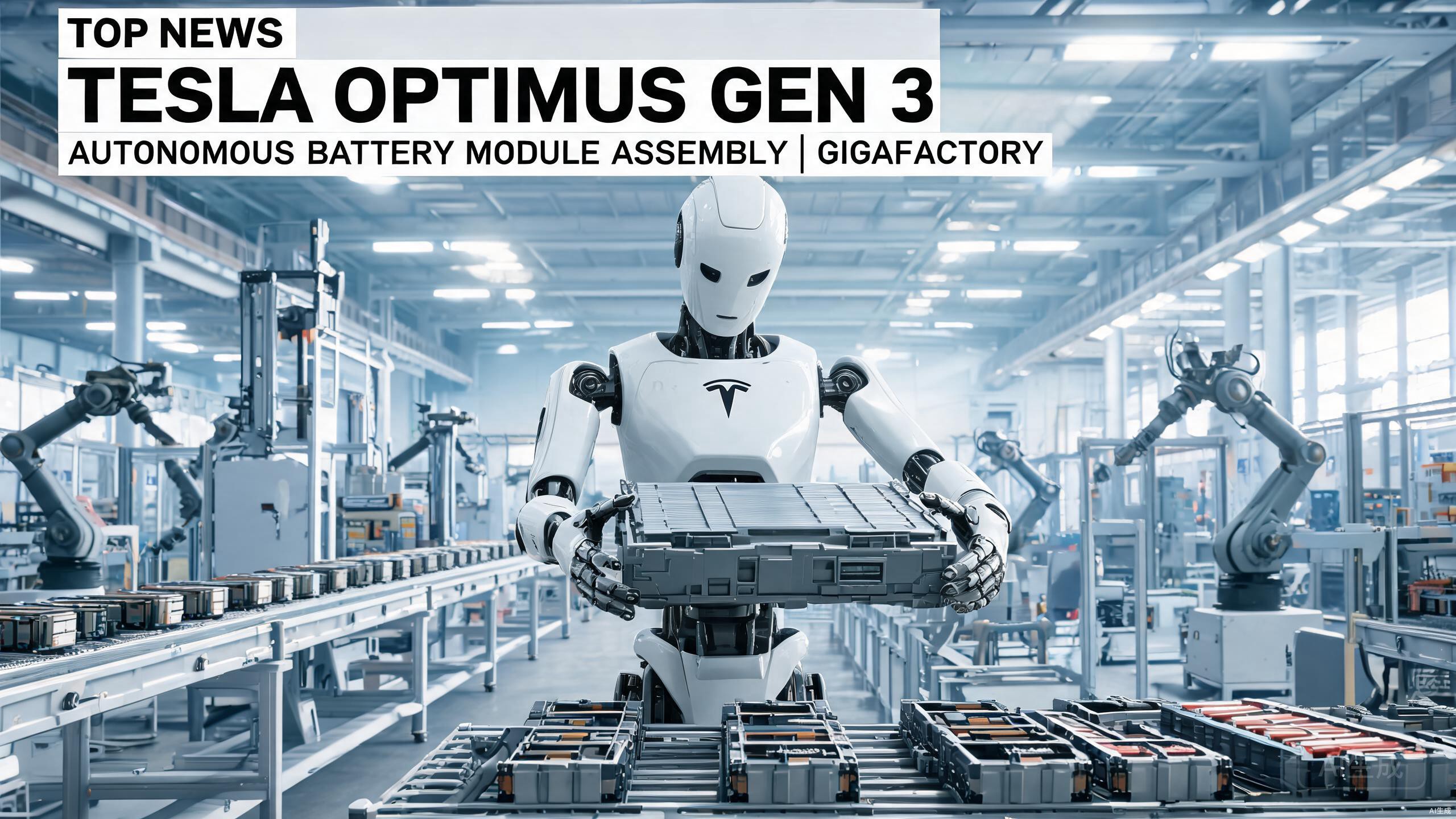
Tesla has deployed its third-generation Optimus humanoid robots at the company's Gigafactory in Texas, where they are now autonomously handling and transporting battery cells across the sprawling manufacturing facility. This marks the first time Tesla has integrated humanoid robots into its actual production workflow at scale.
The Gen 3 Optimus features significant hardware upgrades over its predecessors, including a 22-degree-of-freedom dexterous hand with tactile sensing, improved torque-dense actuators, and a redesigned battery pack that extends operational time to approximately 8 hours per charge. The robot stands at 1.73 meters tall and weighs 56 kilograms.
According to Tesla's internal reports, a fleet of roughly 50 Optimus units has been operating across multiple shifts at the Gigafactory, primarily tasked with picking 4680 battery cells from production lines and transporting them to assembly stations. The robots navigate autonomously using Tesla's custom vision-based AI system, which shares its neural network architecture with the company's Full Self-Driving technology.
Elon Musk stated during a company briefing that the deployment represents a 'proof of concept' for Tesla's broader vision of replacing repetitive human labor with general-purpose humanoid robots. Tesla aims to scale Optimus production to thousands of units by 2026, with initial external sales targeting manufacturing and logistics customers.
The successful deployment has attracted attention from other major manufacturers, with several automotive and electronics companies reportedly in discussions with Tesla about potential Optimus pilot programs at their own facilities.
Optimus will be bigger than the car business. It's the next phase of Tesla's mission to accelerate the world's transition to sustainable energy.
— Elon Musk, CEO of Tesla
Related Robot
Optimus
Tesla
Related News
 特斯拉 / 工厂现场披露
Tesla Puts First 1,000 Optimus Units to Work in Its Own Factories
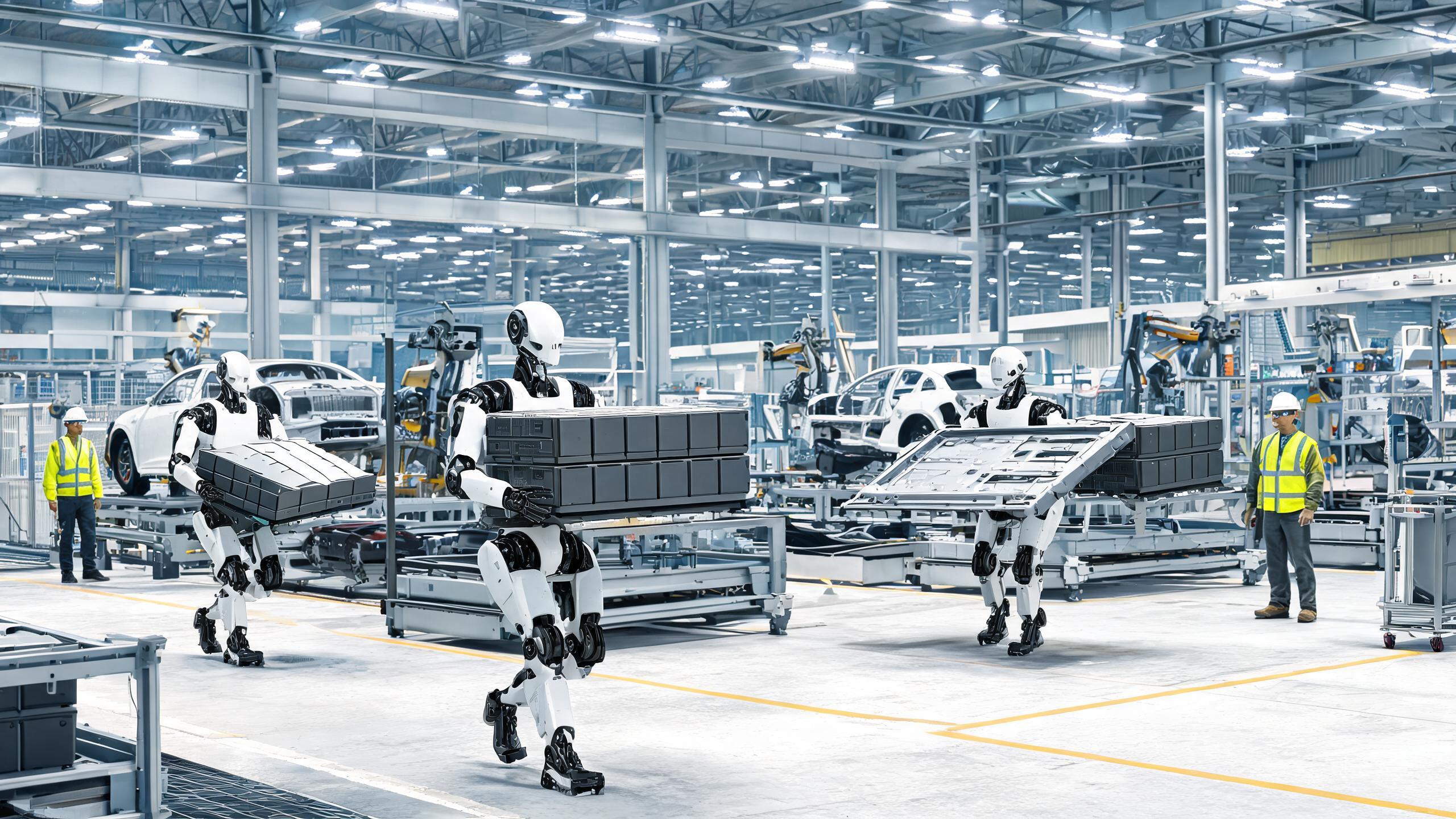
Tesla has deployed its first 1,000 production Optimus humanoids to internal logistics work at Fremont and Gigafactory Texas as of November 21, 2026, with weekly output climbing to about 400 units. The robots handle battery-pack movement, harness sorting and body-panel feeding across three shifts. Tesla reiterated that external customer deliveries remain targeted for the end of 2027.
 Tesla / Elon Musk 访谈
Musk Reveals Optimus Will Cost ~$30,000 Initially, $20,000 Later — First Deliveries in Late 2027, Lease Model Planned
Elon Musk revealed in a November 8, 2026 interview that the initial production cost of Tesla's Optimus humanoid robot will be approximately $30,000 — comparable to a Model 3 — dropping to about $20,000 once at scale. The first external deliveries are targeted for late 2027, with a 'lease not sell' model under consideration to lower the barrier for businesses. Before external sales, Optimus will be deployed in Tesla's own factories to complete millions of assembly tasks.
 特斯拉 Q3 财报电话会议 / 环球 Tech
Tesla Optimus Begins High-Volume Production on Retrofitted Fremont Line; Musk Predicts Robot Memory Demand Will Exceed All Other Use Cases
Tesla confirmed in its Q3 2026 earnings call that Optimus has begun high-volume production on a retrofitted Fremont plant line — the same line that built Model S/X before conversion, which took just 46 days. The line targets 1 million units annual capacity with weekly 20,000 units planned once fully ramped. Musk separately told investors that humanoid robot memory demand will exceed all other use cases combined by 2030, as robots stream continuous sensor data at kilobyte-per-second rates 24/7.