Musk Reveals Optimus Will Cost ~$30,000 Initially, $20,000 Later — First Deliveries in Late 2027, Lease Model Planned
Elon Musk revealed in a November 8, 2026 interview that the initial production cost of Tesla's Optimus humanoid robot will be approximately $30,000 — comparable to a Model 3 — dropping to about $20,000 once at scale. The first external deliveries are targeted for late 2027, with a 'lease not sell' model under consideration to lower the barrier for businesses. Before external sales, Optimus will be deployed in Tesla's own factories to complete millions of assembly tasks.

Elon Musk dropped two numbers and one strategy on November 8, 2026: Optimus will cost approximately $30,000 initially, drop to $20,000 at scale, and Tesla may lease it instead of selling it. The interview, widely reported across tech outlets, provides the most concrete pricing and delivery guidance Tesla has ever given for its humanoid program.
The $30,000 figure is significant because it puts Optimus at Model 3 price points — a reminder that Tesla's humanoid strategy is explicitly built on its EV manufacturing competency. Most Western humanoid makers target $100K+ enterprise contracts; Chinese makers target $20K–$60K. Optimus at $30K would be aggressively priced for industrial deployment, potentially undercutting both Apptronik's Apollo and Agility's Digit 5 by a factor of 3–5×.
The $20K target at scale is even more ambitious. Musk is betting that high-volume Fremont production — targeting 1 million units annually per the Q3 2026 earnings call — will drive component costs down the same way Tesla EV costs have fallen. If true, this would make Optimus the cheapest full-size humanoid robot from a major maker by a wide margin.
The 'lease not sell' model is a shrewd marketing and financial play. A $30K upfront price is still a barrier for small and medium businesses; a $500/month lease payment for a robot that works 16 hours a day, 7 days a week is an easy ROI calculation. Tesla already has experience with subscription models through its Full Self-Driving service, and leasing would keep robots as a recurring revenue asset rather than a one-time sale.
Musk also confirmed the familiar roadmap: Optimus deploys first in Tesla factories (millions of assembly tasks), then to external customers. The Fremont production line — retrofitted from a Model S/X line in 46 days — is targeted for 20,000 units weekly once fully ramped. Late 2027 external deliveries mean the line must reach full capacity by mid-2027, an aggressive timeline that even Tesla admits is tight. But with $30K cost points and a lease model, Optimus could become the first humanoid robot that actually sells by the thousands — not just by the dozens.
At $30K initially and $20K at scale, Optimus would undercut Western humanoids by 3–5× — and a lease model lowers the barrier for small businesses.
— 行业评论 / Tesla 访谈
Related Robot
Optimus
Tesla
Related News
 特斯拉 / 工厂现场披露
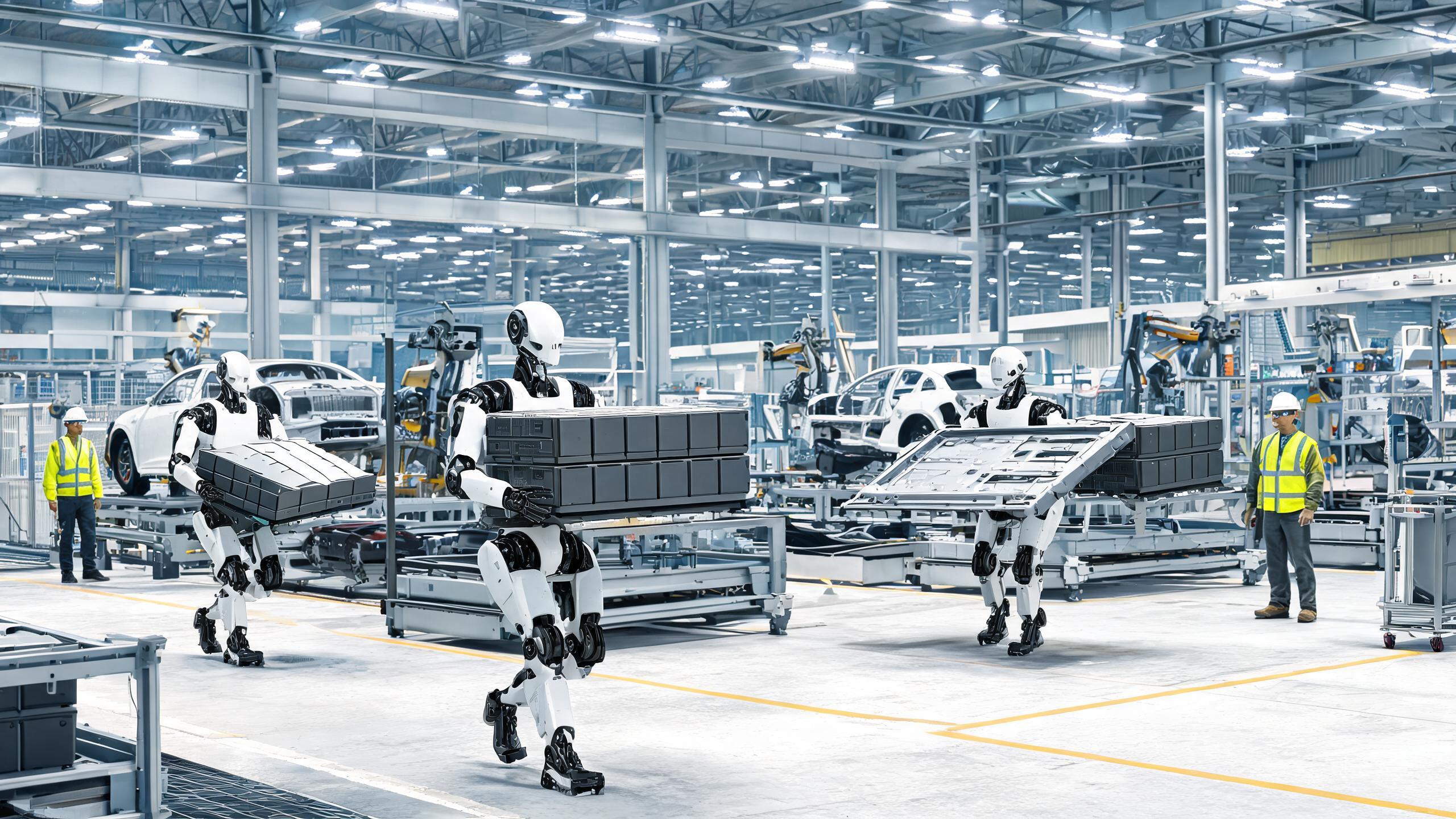
Tesla Puts First 1,000 Optimus Units to Work in Its Own Factories
Tesla has deployed its first 1,000 production Optimus humanoids to internal logistics work at Fremont and Gigafactory Texas as of November 21, 2026, with weekly output climbing to about 400 units. The robots handle battery-pack movement, harness sorting and body-panel feeding across three shifts. Tesla reiterated that external customer deliveries remain targeted for the end of 2027.
 特斯拉 Q3 财报电话会议 / 环球 Tech
Tesla Optimus Begins High-Volume Production on Retrofitted Fremont Line; Musk Predicts Robot Memory Demand Will Exceed All Other Use Cases
Tesla confirmed in its Q3 2026 earnings call that Optimus has begun high-volume production on a retrofitted Fremont plant line — the same line that built Model S/X before conversion, which took just 46 days. The line targets 1 million units annual capacity with weekly 20,000 units planned once fully ramped. Musk separately told investors that humanoid robot memory demand will exceed all other use cases combined by 2030, as robots stream continuous sensor data at kilobyte-per-second rates 24/7.
 USPTO / Humanoids Daily / EE Times China
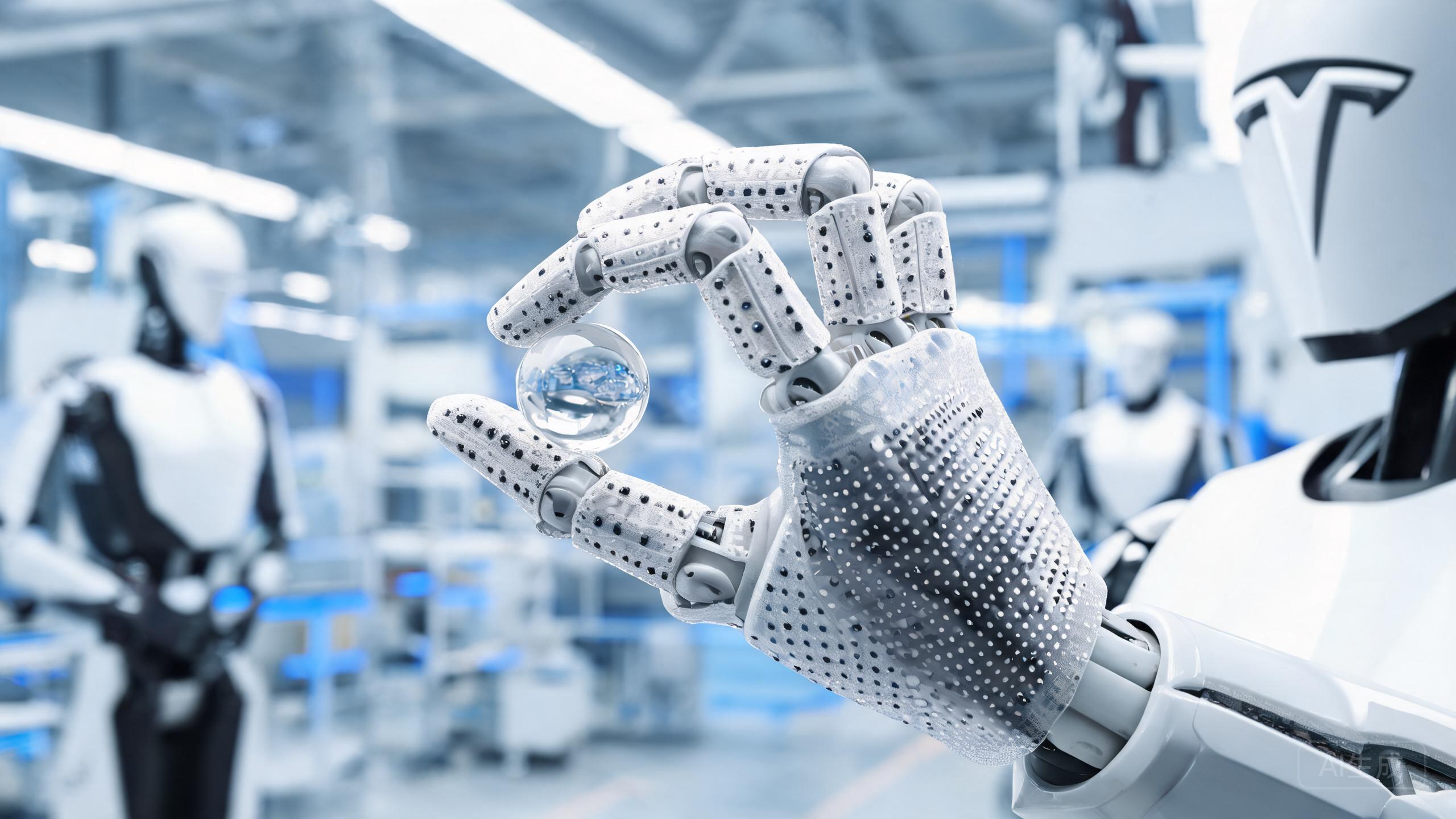
Tesla Patents 3D Flexible Tactile Sensor 'Skin' for Optimus Robot Hands
On October 8, 2026, the US Patent and Trademark Office published a Tesla patent application (US 2026/0310299 A1) titled 'Three-Dimensional Flexible Tactile Sensor Array with Multimodal Sensing and Scalable Manufacturing Method.' The technology describes flexible touch-sensing skin designed to conform to the curved surfaces of robotic fingers and palms, giving Optimus human-like tactile sensitivity. The sensors can detect pressure, shear force, and temperature simultaneously using printable manufacturing methods that support mass production. The patent addresses a key weakness of current humanoid robots — poor tactile feedback — and could significantly improve manipulation dexterity for tasks requiring fine motor control.