Tesla Patents 3D Flexible Tactile Sensor 'Skin' for Optimus Robot Hands
On October 8, 2026, the US Patent and Trademark Office published a Tesla patent application (US 2026/0310299 A1) titled 'Three-Dimensional Flexible Tactile Sensor Array with Multimodal Sensing and Scalable Manufacturing Method.' The technology describes flexible touch-sensing skin designed to conform to the curved surfaces of robotic fingers and palms, giving Optimus human-like tactile sensitivity. The sensors can detect pressure, shear force, and temperature simultaneously using printable manufacturing methods that support mass production. The patent addresses a key weakness of current humanoid robots — poor tactile feedback — and could significantly improve manipulation dexterity for tasks requiring fine motor control.
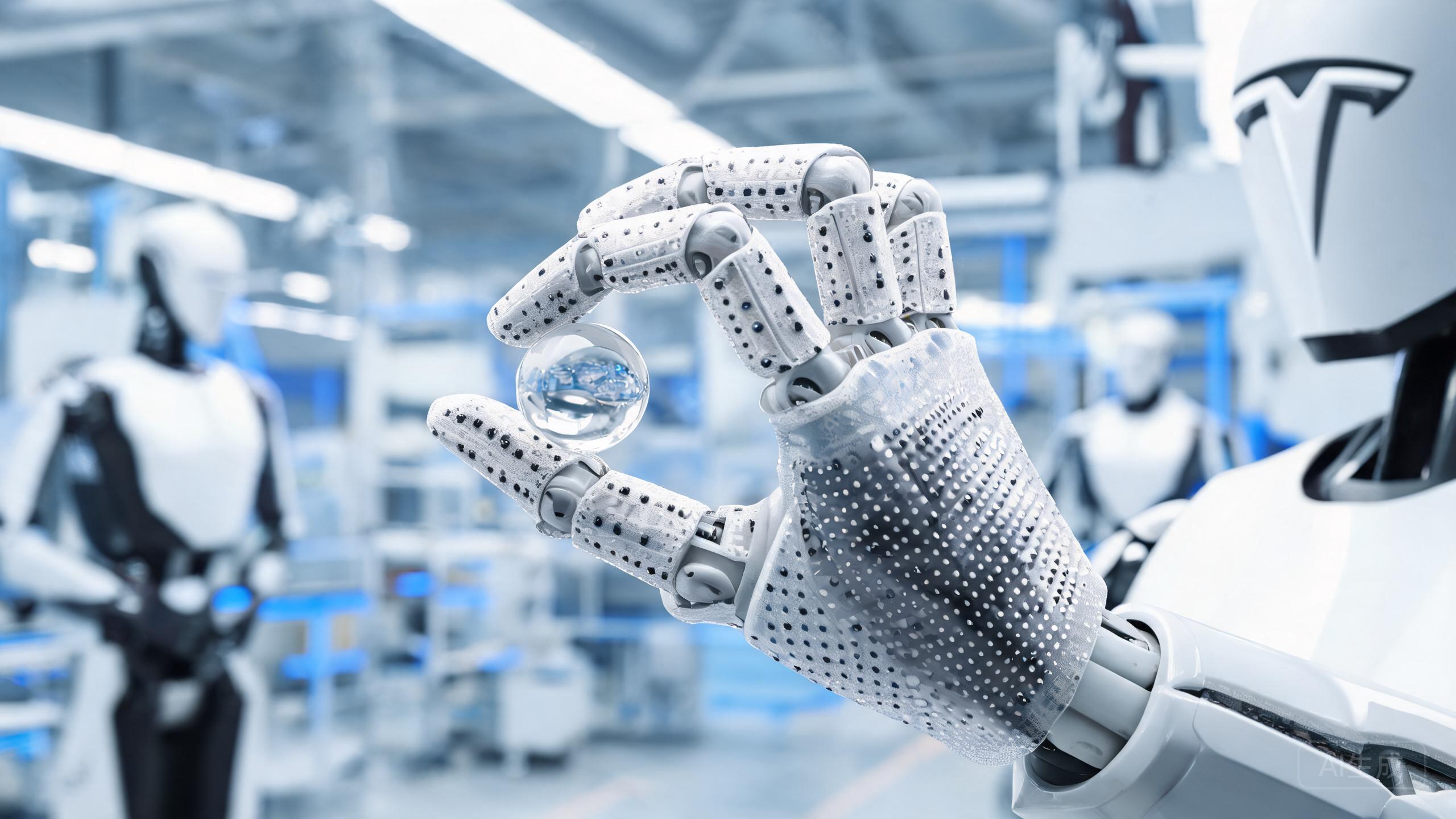
On October 8, 2026, the United States Patent and Trademark Office (USPTO) published a patent application from Tesla that could represent a major leap forward in humanoid robot dexterity. The patent, bearing application number US 2026/0310299 A1 and titled 'Three-Dimensional Flexible Tactile Sensor Array with Multimodal Sensing and Scalable Manufacturing Method,' details a system of flexible, touch-sensitive sensors designed to cover the curved surfaces of robotic fingers and palms — essentially giving the Optimus robot an artificial 'skin' with human-like tactile perception.
What makes Tesla's approach notable is both the sensor technology itself and the manufacturing method. The three-dimensional flexible sensor array is engineered to conform naturally to the complex curved surfaces of robotic hands — fingers, knuckles, palm contours — a challenge that has limited the tactile capabilities of most current humanoid robots. Unlike rigid sensor pads that only cover flat fingertip surfaces, Tesla's design wraps around the full 3D geometry of the hand, providing tactile feedback across the entire contact surface, much like human skin.
The sensors are multimodal, capable of detecting multiple types of physical stimuli simultaneously. According to the patent, each sensor node can measure normal pressure, shear force (lateral sliding), and temperature — enabling the robot to feel not just how hard it is pressing something, but also which direction an object is slipping and whether it's hot or cold. This level of multimodal tactile feedback is considered critical for tasks requiring fine manipulation: assembling small parts, handling delicate objects, gripping items of unknown weight, and performing household tasks like folding laundry or washing dishes.
Equally important is the manufacturing approach. Tesla's patent describes printable, scalable fabrication methods that could bring these sensors into mass production at relatively low cost. Given Tesla's stated target of a $20,000 hardware BOM for Optimus, cost-effective manufacturing of advanced sensors is essential. The patent notes that the flexible sensor arrays can be produced using printing techniques compatible with existing semiconductor and flexible electronics manufacturing infrastructure.
While the patent application does not explicitly name Optimus as the application target — a common practice to maintain strategic flexibility — the timing and nature of the technology strongly suggest it is destined for Tesla's humanoid robot program. If successfully integrated into a future version of Optimus (potentially the Gen 3 model expected in 2027), this tactile skin could dramatically close the gap between current robotic manipulation and human-level dexterity. Industry analysts note that poor tactile feedback is one of the biggest bottlenecks preventing humanoid robots from performing everyday manipulation tasks at human levels of speed and reliability.
Poor tactile feedback is one of the biggest bottlenecks preventing humanoid robots from performing everyday manipulation tasks at human levels of speed and reliability.
— Industry analysis / Humanoids Daily
Related Robot
Optimus
Tesla
Related News
 特斯拉 / 工厂现场披露
Tesla Puts First 1,000 Optimus Units to Work in Its Own Factories
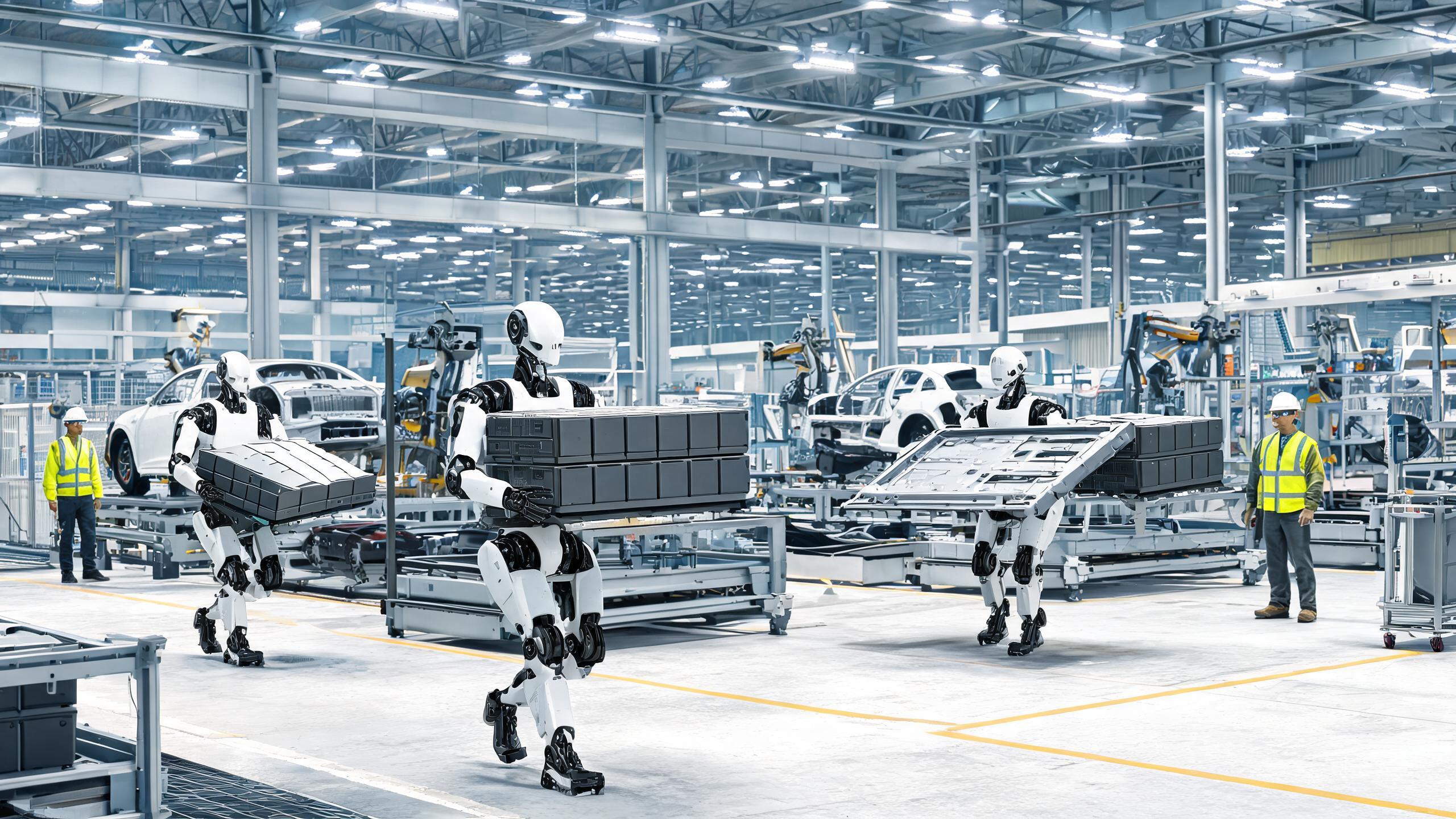
Tesla has deployed its first 1,000 production Optimus humanoids to internal logistics work at Fremont and Gigafactory Texas as of November 21, 2026, with weekly output climbing to about 400 units. The robots handle battery-pack movement, harness sorting and body-panel feeding across three shifts. Tesla reiterated that external customer deliveries remain targeted for the end of 2027.
 Tesla / Elon Musk 访谈
Musk Reveals Optimus Will Cost ~$30,000 Initially, $20,000 Later — First Deliveries in Late 2027, Lease Model Planned
Elon Musk revealed in a November 8, 2026 interview that the initial production cost of Tesla's Optimus humanoid robot will be approximately $30,000 — comparable to a Model 3 — dropping to about $20,000 once at scale. The first external deliveries are targeted for late 2027, with a 'lease not sell' model under consideration to lower the barrier for businesses. Before external sales, Optimus will be deployed in Tesla's own factories to complete millions of assembly tasks.
 特斯拉 Q3 财报电话会议 / 环球 Tech
Tesla Optimus Begins High-Volume Production on Retrofitted Fremont Line; Musk Predicts Robot Memory Demand Will Exceed All Other Use Cases
Tesla confirmed in its Q3 2026 earnings call that Optimus has begun high-volume production on a retrofitted Fremont plant line — the same line that built Model S/X before conversion, which took just 46 days. The line targets 1 million units annual capacity with weekly 20,000 units planned once fully ramped. Musk separately told investors that humanoid robot memory demand will exceed all other use cases combined by 2030, as robots stream continuous sensor data at kilobyte-per-second rates 24/7.