Morgan Stanley Forecasts Tens of Billions of Robots Within Two Decades
On September 23, 2026, Morgan Stanley strategist Adam Jonas published a forecast that tens of billions of robots will enter daily life within 1-2 decades, with humanoids being only one of thousands of form factors. His most aggressive projection: AI combined with robotics could multiply global GDP by 8-10x. Jonas described physical AI as potentially socially destabilizing and decisive for military competition, with Tesla and SpaceX as anchor investments and China embedded in the supply chain.
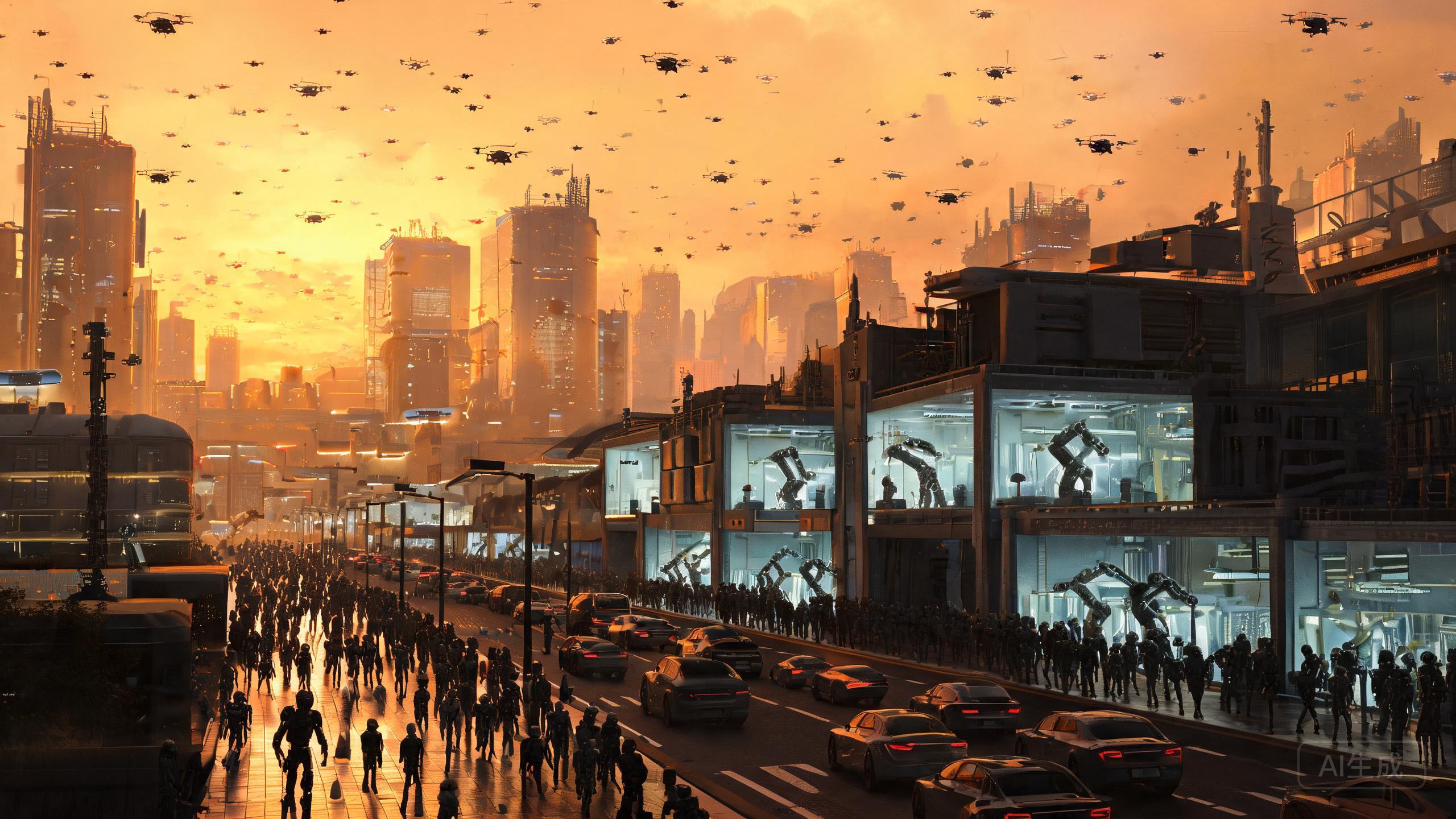
On September 23, 2026, Morgan Stanley strategist Adam Jonas told Bloomberg Tech that he expects tens of billions of robots to enter daily life within the next one to two decades. Humanoids, he noted, receive disproportionate attention and currently function partly as a recruiting and capital-raising tool — but represent only one form factor among thousands in the coming physical AI economy.
Jonas's most aggressive projection is that combining AI with robotics could multiply global GDP by eight to ten times. He described this as a long-range scenario rather than an evidenced near-term forecast. Physical AI, he argued, could be socially destabilizing and decisive for military competition. Morgan Stanley's scenarios still place the number of humanoids in the billions by 2050.
The core technical argument centers on edge inference. Jonas expects any machine that can be automated and equipped with an edge inference computer will eventually receive one. He compared using a data center GPU for a simple inference request to 'using a Ferrari to collect milk.' Connected robots would collectively perform a substantial share of global inference locally, rather than sending every task to centralized data centers.
Morgan Stanley views Tesla and SpaceX as complementary physical AI companies. Tesla serves as the manufacturing and data collection layer — producing robots and gathering physical world data. SpaceX provides connectivity and AI infrastructure, including the orbital computing concept associated with Elon Musk. Jonas declined to assign probability to a merger but said investors should expect continued cooperation.
On supply chains, Jonas described China's lead in manufacturing ecosystems, critical minerals, and component supply as a fact the US cannot quickly unwind. He expects physical AI investment to encourage US manufacturing while preserving extensive supply chain links with China. Regulation, he argued, is built into the base case — AI-equipped robots will face extensive oversight because independent machines can have both civilian and military uses.
Using a data center GPU for a simple inference request is like using a Ferrari to collect milk.
— Adam Jonas, Morgan Stanley
Related Robot
Optimus
Tesla
Related News
 特斯拉 / 工厂现场披露
Tesla Puts First 1,000 Optimus Units to Work in Its Own Factories
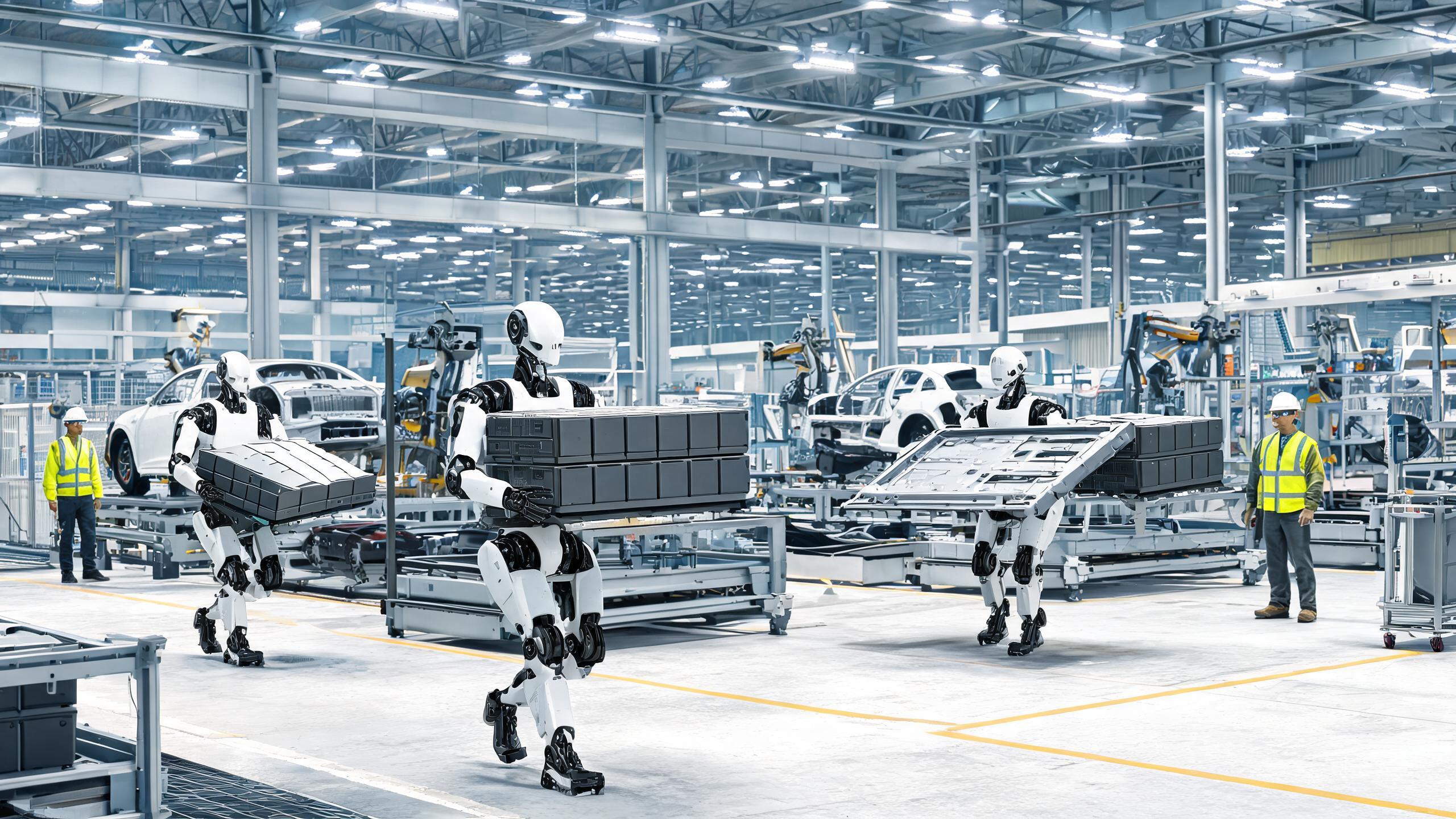
Tesla has deployed its first 1,000 production Optimus humanoids to internal logistics work at Fremont and Gigafactory Texas as of November 21, 2026, with weekly output climbing to about 400 units. The robots handle battery-pack movement, harness sorting and body-panel feeding across three shifts. Tesla reiterated that external customer deliveries remain targeted for the end of 2027.
 Tesla / Elon Musk 访谈
Musk Reveals Optimus Will Cost ~$30,000 Initially, $20,000 Later — First Deliveries in Late 2027, Lease Model Planned
Elon Musk revealed in a November 8, 2026 interview that the initial production cost of Tesla's Optimus humanoid robot will be approximately $30,000 — comparable to a Model 3 — dropping to about $20,000 once at scale. The first external deliveries are targeted for late 2027, with a 'lease not sell' model under consideration to lower the barrier for businesses. Before external sales, Optimus will be deployed in Tesla's own factories to complete millions of assembly tasks.
 特斯拉 Q3 财报电话会议 / 环球 Tech
Tesla Optimus Begins High-Volume Production on Retrofitted Fremont Line; Musk Predicts Robot Memory Demand Will Exceed All Other Use Cases
Tesla confirmed in its Q3 2026 earnings call that Optimus has begun high-volume production on a retrofitted Fremont plant line — the same line that built Model S/X before conversion, which took just 46 days. The line targets 1 million units annual capacity with weekly 20,000 units planned once fully ramped. Musk separately told investors that humanoid robot memory demand will exceed all other use cases combined by 2030, as robots stream continuous sensor data at kilobyte-per-second rates 24/7.