World's First Fully-Domestic Electronic Architecture Embodied AI Robot Launched in Yichang
On September 28, 2026, the world's first embodied AI robot with a fully domestically-developed electronic architecture was launched in Yichang, Hubei Province. Named 'Hongdao', the robot uses a 100% domestic chip stack including main processor, motion control chips, and sensor processing units — eliminating reliance on imported chips for its core electronic system. The project was jointly developed by Hubei-based research institutions and domestic semiconductor partners, marking a milestone in China's push for self-reliance in humanoid robotics.
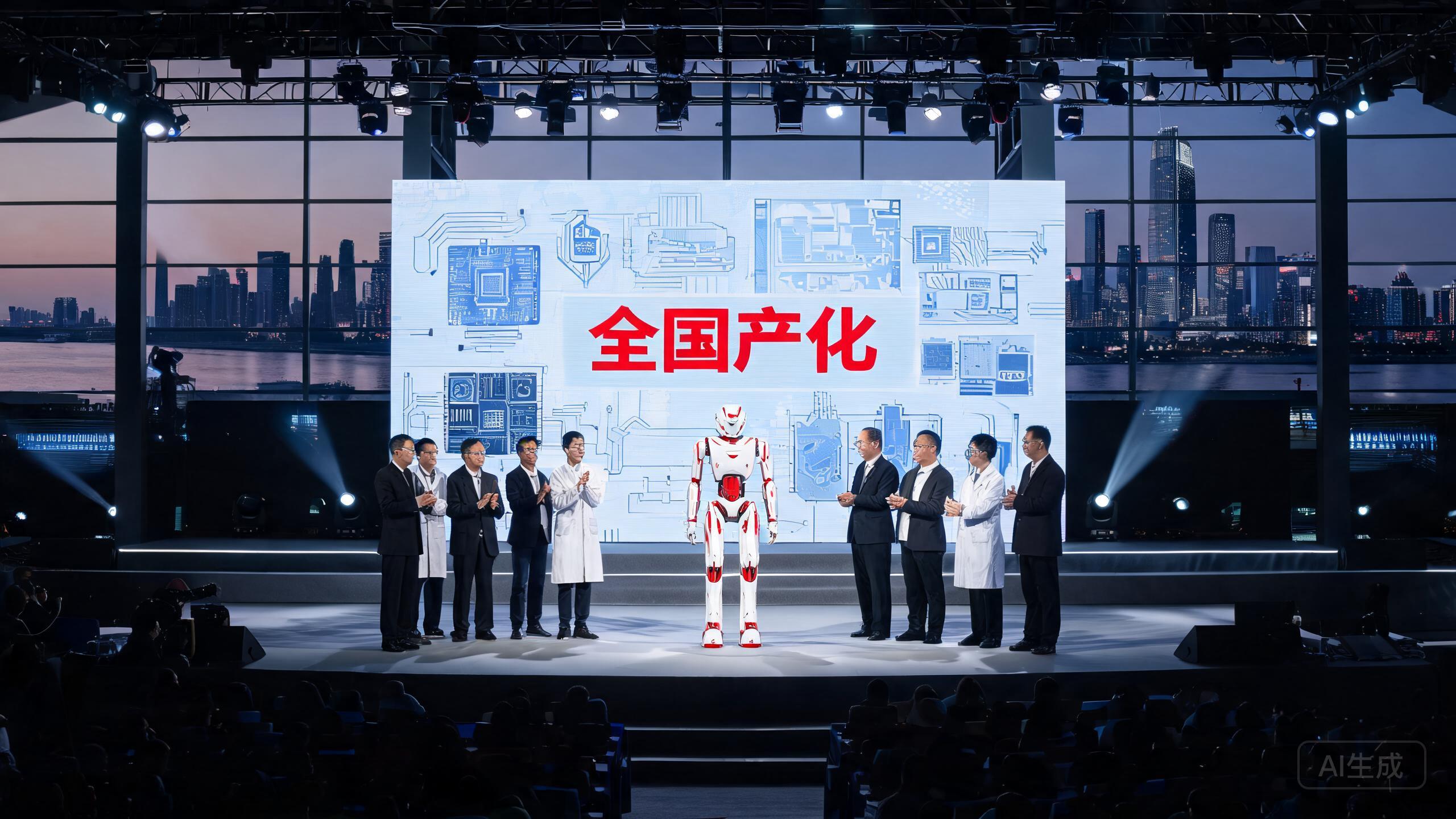
On September 28, 2026, the world's first embodied AI robot with a fully domestically-developed electronic architecture was officially launched in Yichang, Hubei Province. Named 'Hongdao', the robot represents a breakthrough in China's push for semiconductor self-reliance in the humanoid robotics sector.
What distinguishes Hongdao from other Chinese humanoids is that its entire electronic architecture — from the main application processor to the real-time motion control chips, sensor interface units, and power management ICs — uses 100% domestically designed and manufactured semiconductors. While many Chinese humanoid companies use domestic mechanical components, most still rely on imported chips from NVIDIA, AMD, Intel, and Japanese MCU manufacturers for their core electronic systems.
The domestically-developed chip stack includes a high-performance domestic AI processor for vision and language processing, multiple dedicated motion control SoCs for real-time joint control, and domestic sensor fusion chips. The team reportedly overcame significant challenges in system integration, thermal management, and real-time performance when transitioning from imported to domestic chip solutions.
The project was jointly developed by Hubei-based research institutions in partnership with domestic semiconductor companies, supported by provincial and municipal science and technology funds. Yichang has been positioning itself as a hub for humanoid robotics R&D and manufacturing in central China, leveraging the region's strong manufacturing base and growing semiconductor ecosystem.
Industry observers note that while the fully domestic architecture is an important strategic milestone, the robot's overall performance — in terms of AI capability, movement smoothness, and task completion — may still lag behind top international models that use cutting-edge imported chips. The significance lies less in immediate performance parity and more in establishing a fully independent supply chain that cannot be disrupted by export controls, providing strategic autonomy for China's humanoid robotics industry going forward.
The significance lies less in immediate performance parity and more in establishing a fully independent supply chain that cannot be disrupted by export controls.
— 行业分析 / 央视新闻报道
Related Robot
Agibot A3
Agibot
Related News
 工业和信息化部
China's MIIT Issues 2027–2029 Humanoid Robot Action Plan, Targeting 500,000 Units a Year
The Ministry of Industry and Information Technology published a three-year action plan for humanoid robots on November 23, 2026, covering 2027–2029. Targets include annual output of 500,000 units, an industry scale of ¥300 billion, 85% localization of core components, three to five globally competitive platform companies, and at least 100 demonstration projects each in automotive, electronics, logistics and elderly care.
 香港交易所 / 智元机器人招股书
AgiBot Files for Hong Kong IPO to Raise $1.5 Billion, Targeting a ~HK$100 Billion Valuation
AgiBot submitted a listing application to the Hong Kong Stock Exchange on November 17, 2026, seeking to raise about $1.5 billion at a targeted valuation of roughly HK$100 billion. The filing discloses ¥4.7 billion in revenue for the first nine months of 2026, a net loss of ¥1.1 billion, and cumulative humanoid production of more than 20,000 units, making it the largest humanoid IPO attempt after Unitree and Agility.
 高工机器人 GGII / 产业调研
China's October Humanoid Output Hits 23,600 Units — GGII Raises Full-Year 2026 Forecast to 150,000
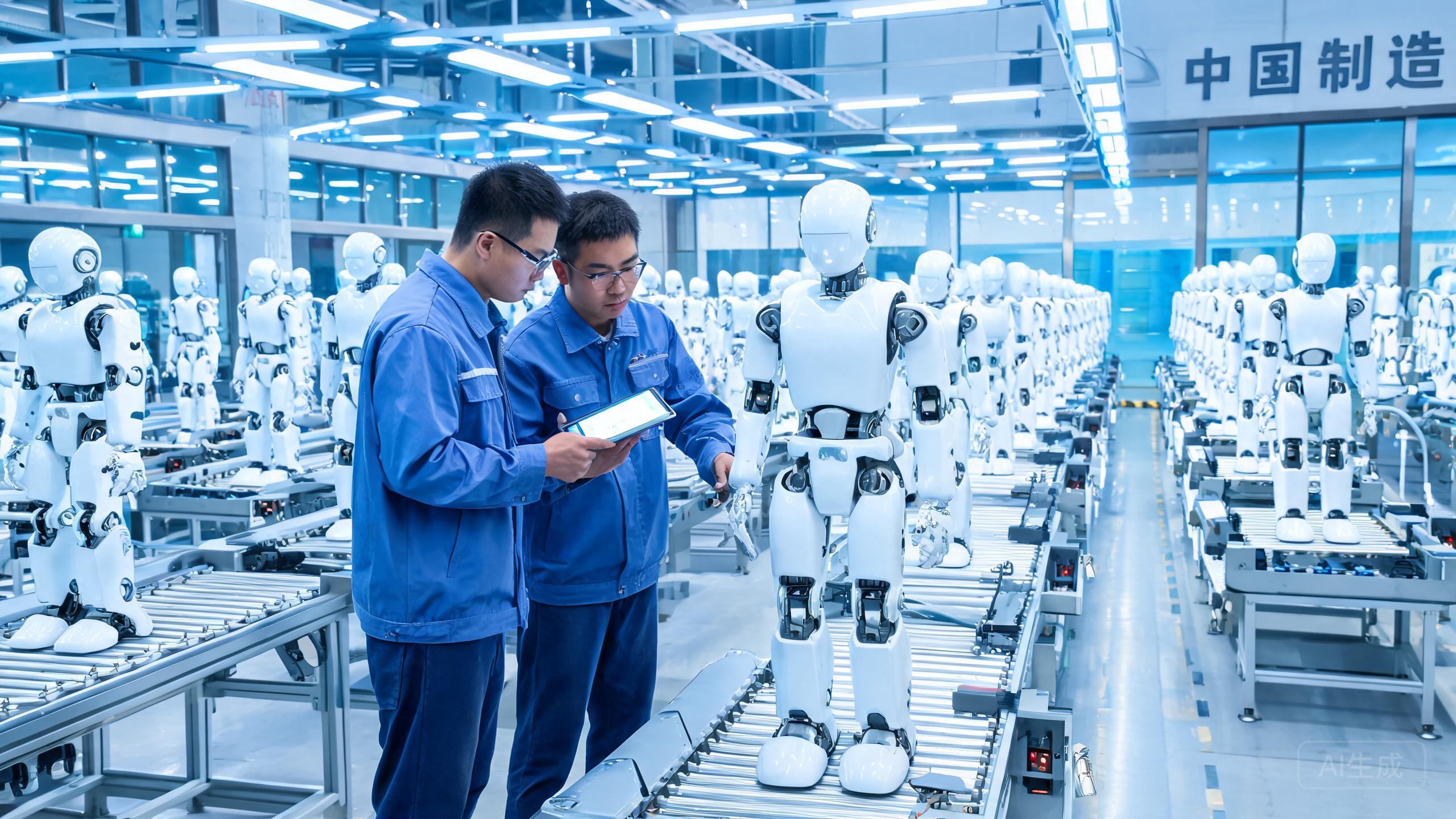
GGII data released on November 12, 2026 shows China produced 23,600 humanoid robots in October, up 18.4% month-on-month, bringing January–October output to 114,000 units. The research firm raised its full-year 2026 forecast from 100,000 to 150,000 units — its third upward revision this year — as average selling prices fell to ¥180,000 and Chinese makers held roughly 93% of global shipments.