Faraday Future Launches Nine EAI Robots at 919 Event, Immediate Delivery
On September 19, 2026, Faraday Future (FFAI) held its 919 FF EAI Robotics launch in Los Angeles, unveiling nine new Embodied AI device configurations across five models, three product series, and two robot form factors (humanoid + quadruped). Prices range from $9,990 to $137,900. All nine configurations are available for immediate sale and delivery through FF.com, Amazon, and RobotShop. FF claims to be the US robotics company with the widest range of device forms, sizes, and models.
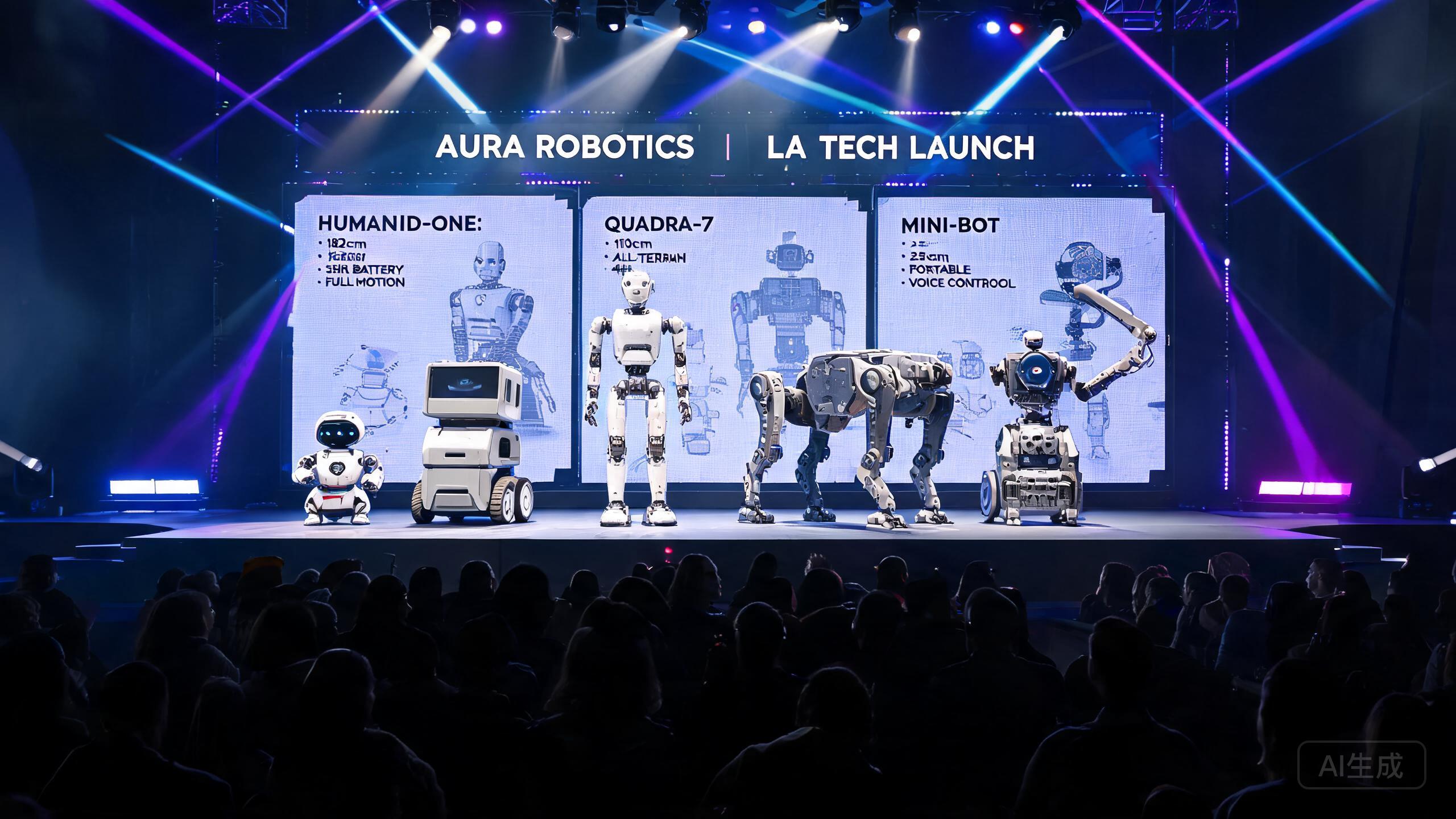
On September 19, 2026, Faraday Future Intelligent Electric Inc. (NASDAQ: FFAI) held its 919 FF EAI Robotics launch event in Los Angeles, putting nine new Embodied AI (EAI) device configurations on sale across five models, three product series, and two major robot forms. All nine are available for immediate sale and delivery through FF.com, Amazon, and RobotShop.
The product lineup spans humanoid and quadruped forms. The All-New Futurist, FF's flagship full-size humanoid, is the first US-native robot to support NVIDIA SONIC full-body motion control. It is described as having the strongest motion control and 'brain' among currently available EAI robots. The Ultra version is priced at $17,990 and includes a Skills Package valued at $2,000.
The FX Aegis Hyper is a large industrial-grade EAI quadruped designed for extreme environments, heavy-duty tasks, and high-risk autonomous operations. It supports professional payloads including thermal imaging, gas detection, 3D scanning, and communications relay equipment, starting at $137,900 with a Skills Package valued at $15,000.
Prices across the nine configurations range from $9,990 to $137,900. FF positions this as completing its 'One-Brain Multi-Form Multi-Capability' FF EAI Robot World 2.0 strategy — a unified AI brain across multiple physical forms and capabilities. The company claims to be the US robotics company with the widest range of device forms, size coverage, and product models.
The 919 launch also included four industry productivity solutions spanning security, logistics, inspection, and companionship. FF founder and CEO YT Jia described the strategy as 'Four-Core Full-Stack AI' — combining the EAI Brain, device forms, solutions, and data into an integrated ecosystem. The immediate availability is notable in an industry where most competitors announce products months or years before delivery.
FF becomes the US robotics company with the widest range of EAI device forms, the broadest size coverage, and the largest number of product models.
— Faraday Future official announcement
Related Robot
Optimus
Tesla
Related News
 特斯拉 / 工厂现场披露
Tesla Puts First 1,000 Optimus Units to Work in Its Own Factories
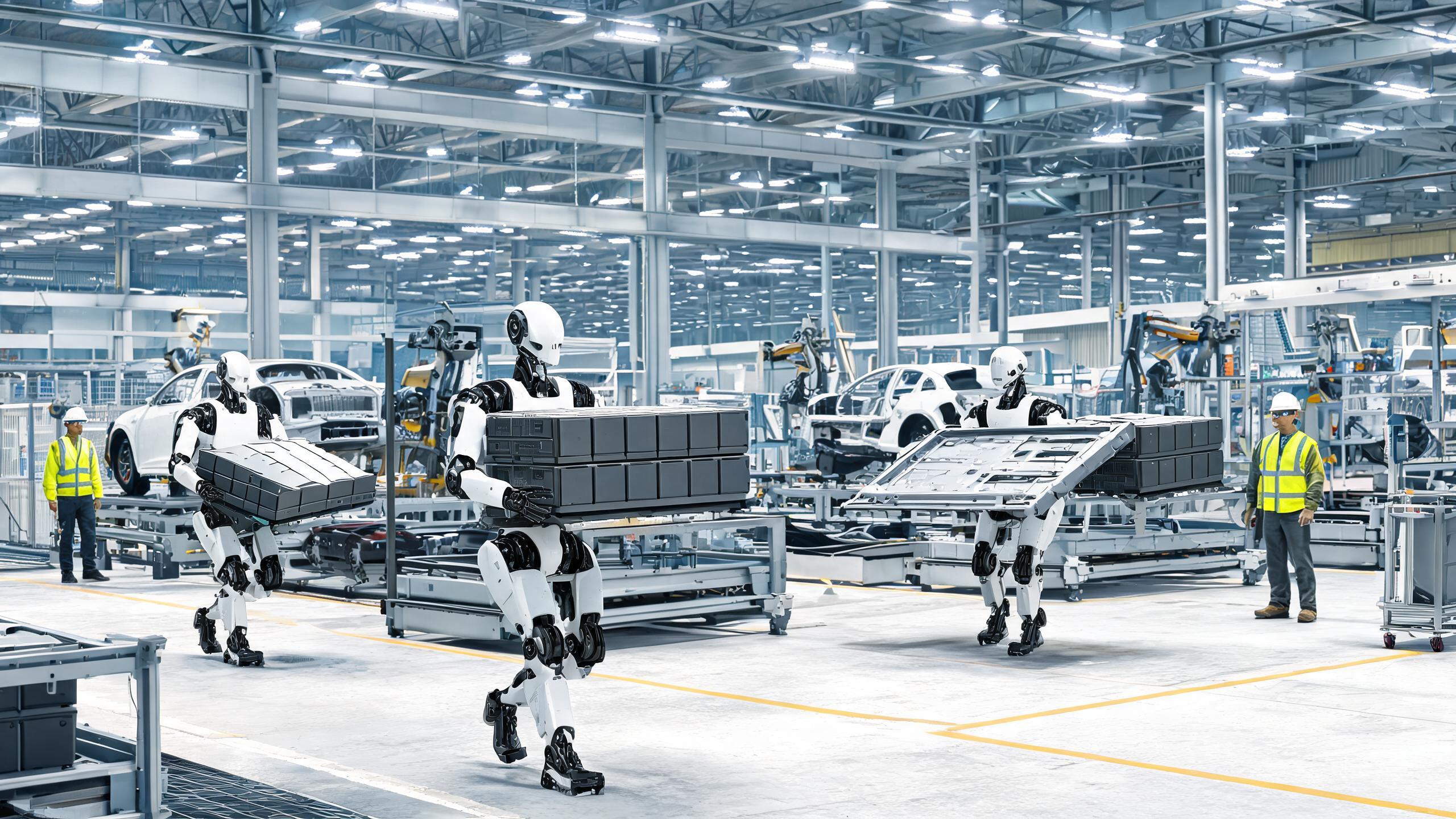
Tesla has deployed its first 1,000 production Optimus humanoids to internal logistics work at Fremont and Gigafactory Texas as of November 21, 2026, with weekly output climbing to about 400 units. The robots handle battery-pack movement, harness sorting and body-panel feeding across three shifts. Tesla reiterated that external customer deliveries remain targeted for the end of 2027.
 Tesla / Elon Musk 访谈
Musk Reveals Optimus Will Cost ~$30,000 Initially, $20,000 Later — First Deliveries in Late 2027, Lease Model Planned
Elon Musk revealed in a November 8, 2026 interview that the initial production cost of Tesla's Optimus humanoid robot will be approximately $30,000 — comparable to a Model 3 — dropping to about $20,000 once at scale. The first external deliveries are targeted for late 2027, with a 'lease not sell' model under consideration to lower the barrier for businesses. Before external sales, Optimus will be deployed in Tesla's own factories to complete millions of assembly tasks.
 特斯拉 Q3 财报电话会议 / 环球 Tech
Tesla Optimus Begins High-Volume Production on Retrofitted Fremont Line; Musk Predicts Robot Memory Demand Will Exceed All Other Use Cases
Tesla confirmed in its Q3 2026 earnings call that Optimus has begun high-volume production on a retrofitted Fremont plant line — the same line that built Model S/X before conversion, which took just 46 days. The line targets 1 million units annual capacity with weekly 20,000 units planned once fully ramped. Musk separately told investors that humanoid robot memory demand will exceed all other use cases combined by 2030, as robots stream continuous sensor data at kilobyte-per-second rates 24/7.