Agibot Reaches 20,000 Humanoid Units Produced as Industry Enters Mass Production Era
As of October 2026, Chinese humanoid robotics company Agibot (智元机器人) has produced over 20,000 humanoid robots across all product series, according to industry reports and company announcements. The milestone comes as the broader humanoid robotics industry transitions from prototype and pilot phases into genuine mass production. Agibot's production ramp spans multiple product lines including the A-series full-size humanoids (A1, A2, A3) and X-series platforms, supported by its expanding manufacturing capacity and vertically-integrated supply chain. The 20,000-unit threshold reinforces China's position as the world's largest humanoid robot producer by volume, with several manufacturers targeting six-figure annual production rates by 2027.
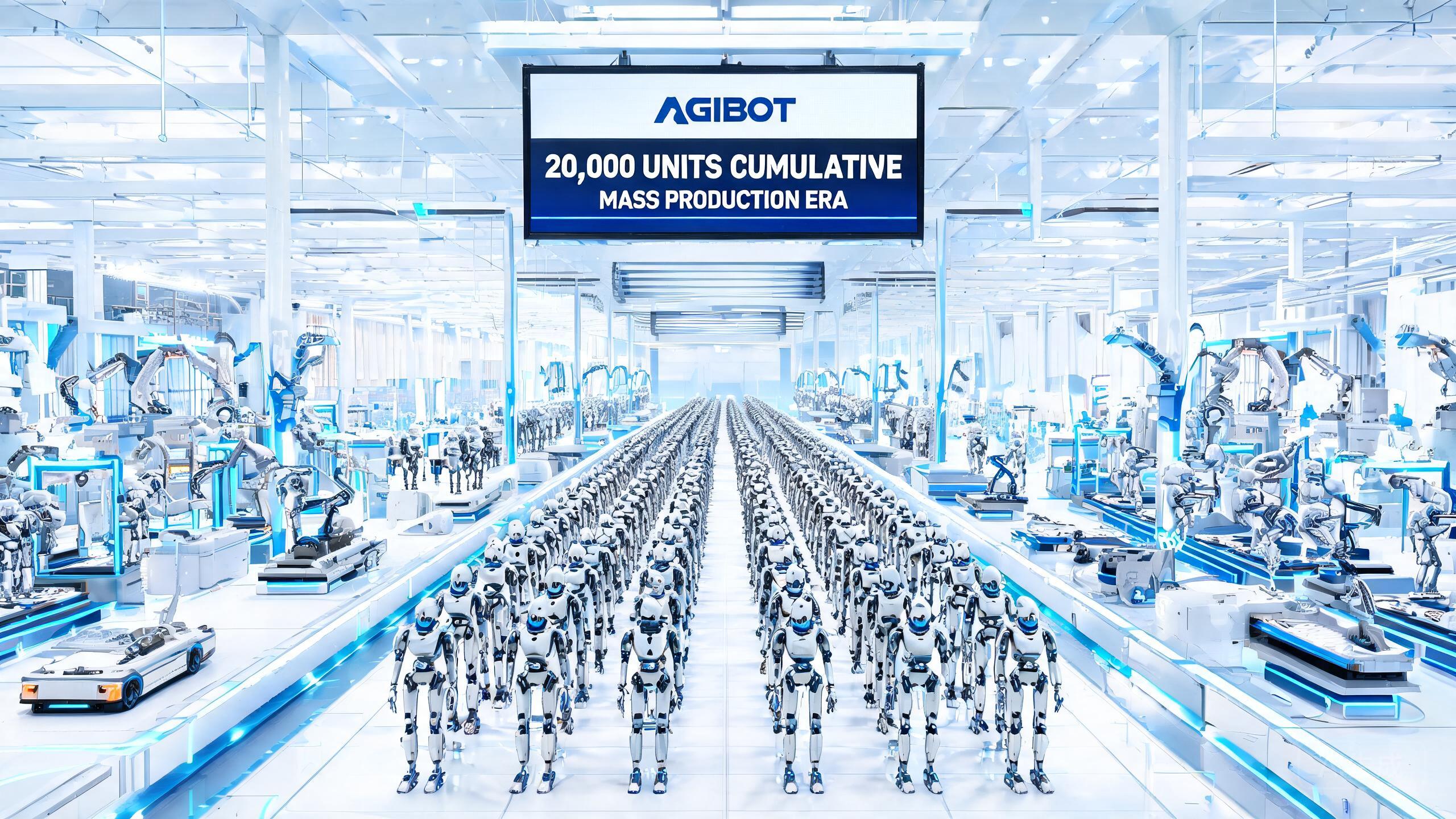
China's humanoid robotics industry has crossed a significant threshold, with Agibot (智元机器人) reporting cumulative production exceeding 20,000 units across all its humanoid robot series as of October 2026. The milestone underscores how rapidly the sector is scaling — moving from the prototype-demonstration phase that defined 2024 and early 2025 into genuine mass manufacturing, with production volumes beginning to resemble those of mature industrial robotics categories.
Agibot's production volume spans multiple product lines. The company's A-series of full-size humanoid robots — including the A1, A2, and the more recent A3 'Peerless Master' edition — accounts for a significant portion of the total, while X-series and other specialized platforms contribute the remainder. The A3 model, unveiled in July 2026, represents the company's current generation flagship, featuring industry-leading power-to-weight ratio achieved through extreme lightweight design (50 kg body weight), high-performance joint actuators, and advanced AI capabilities including the ability to autonomously play table tennis.
The production ramp has been enabled by several factors. Agibot has invested heavily in vertically-integrated manufacturing, producing key components like actuators and dexterous hands in-house rather than relying on external suppliers. The company's commercial cleaning robot business and other service robot lines provide additional manufacturing volume and operational experience. And demand has been strong across both industrial customers — who deploy humanoids for material handling, assembly, and inspection tasks — and research institutions purchasing platforms for embodied AI development.
Agibot is far from the only Chinese humanoid maker scaling up. UBtech's Walker S2 industrial humanoid surpassed 1,000 units produced by the end of 2025, with 2026 capacity targeting the 10,000-unit level and annual order value approaching 1.4 billion yuan. Unitree Robotics saw its IPO surge over 460% on its Shanghai STAR Market debut in mid-August 2026, fueled by investor enthusiasm for humanoid production scale-up. Across the industry, 2026 is widely being called the 'first year of humanoid robot mass production,' with total Chinese production expected to approach or exceed 100,000 units by year-end.
This production scaling is driving down costs and expanding addressable markets. As volumes increase and supply chains mature, price points that were once unimaginable for humanoid robots are becoming a reality — from the 19,999 yuan consumer QiYuan Q1 to industrial models under 200,000 yuan. The industry is now grappling with the next challenge: finding enough high-value applications to absorb the coming production capacity and turn humanoid robotics from a cost center into a profitable business at scale.
2026 is widely being called the 'first year of humanoid robot mass production,' with total Chinese production expected to approach or exceed 100,000 units by year-end.
— Industry analysis / 中国经济网
Related Robot
Agibot A3
Agibot
Related News
 工业和信息化部
China's MIIT Issues 2027–2029 Humanoid Robot Action Plan, Targeting 500,000 Units a Year
The Ministry of Industry and Information Technology published a three-year action plan for humanoid robots on November 23, 2026, covering 2027–2029. Targets include annual output of 500,000 units, an industry scale of ¥300 billion, 85% localization of core components, three to five globally competitive platform companies, and at least 100 demonstration projects each in automotive, electronics, logistics and elderly care.
 香港交易所 / 智元机器人招股书
AgiBot Files for Hong Kong IPO to Raise $1.5 Billion, Targeting a ~HK$100 Billion Valuation
AgiBot submitted a listing application to the Hong Kong Stock Exchange on November 17, 2026, seeking to raise about $1.5 billion at a targeted valuation of roughly HK$100 billion. The filing discloses ¥4.7 billion in revenue for the first nine months of 2026, a net loss of ¥1.1 billion, and cumulative humanoid production of more than 20,000 units, making it the largest humanoid IPO attempt after Unitree and Agility.
 高工机器人 GGII / 产业调研
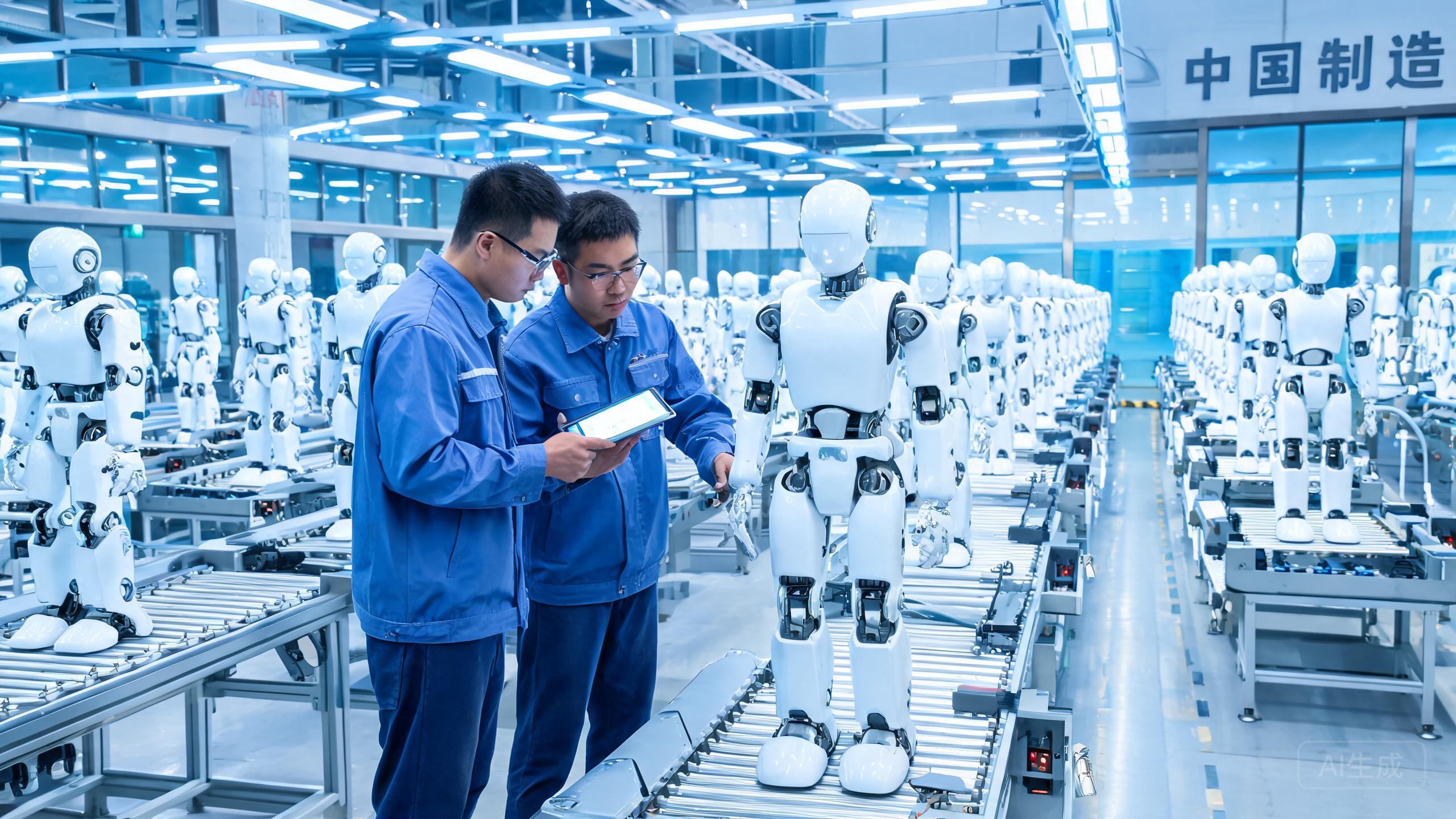
China's October Humanoid Output Hits 23,600 Units — GGII Raises Full-Year 2026 Forecast to 150,000
GGII data released on November 12, 2026 shows China produced 23,600 humanoid robots in October, up 18.4% month-on-month, bringing January–October output to 114,000 units. The research firm raised its full-year 2026 forecast from 100,000 to 150,000 units — its third upward revision this year — as average selling prices fell to ¥180,000 and Chinese makers held roughly 93% of global shipments.