2nd World Humanoid Robot Games Kicks Off in Beijing with 666 Teams
The 2nd World Humanoid Robot Games opened in Beijing on August 22, 2026, with 666 teams from 16 countries and 2,056 robots competing across 51 events. The games expanded from 26 to 51 events, adding long jump, weightlifting, tug-of-war, and table tennis, while scene-based challenges test real-world skills from hotel service to fire rescue.
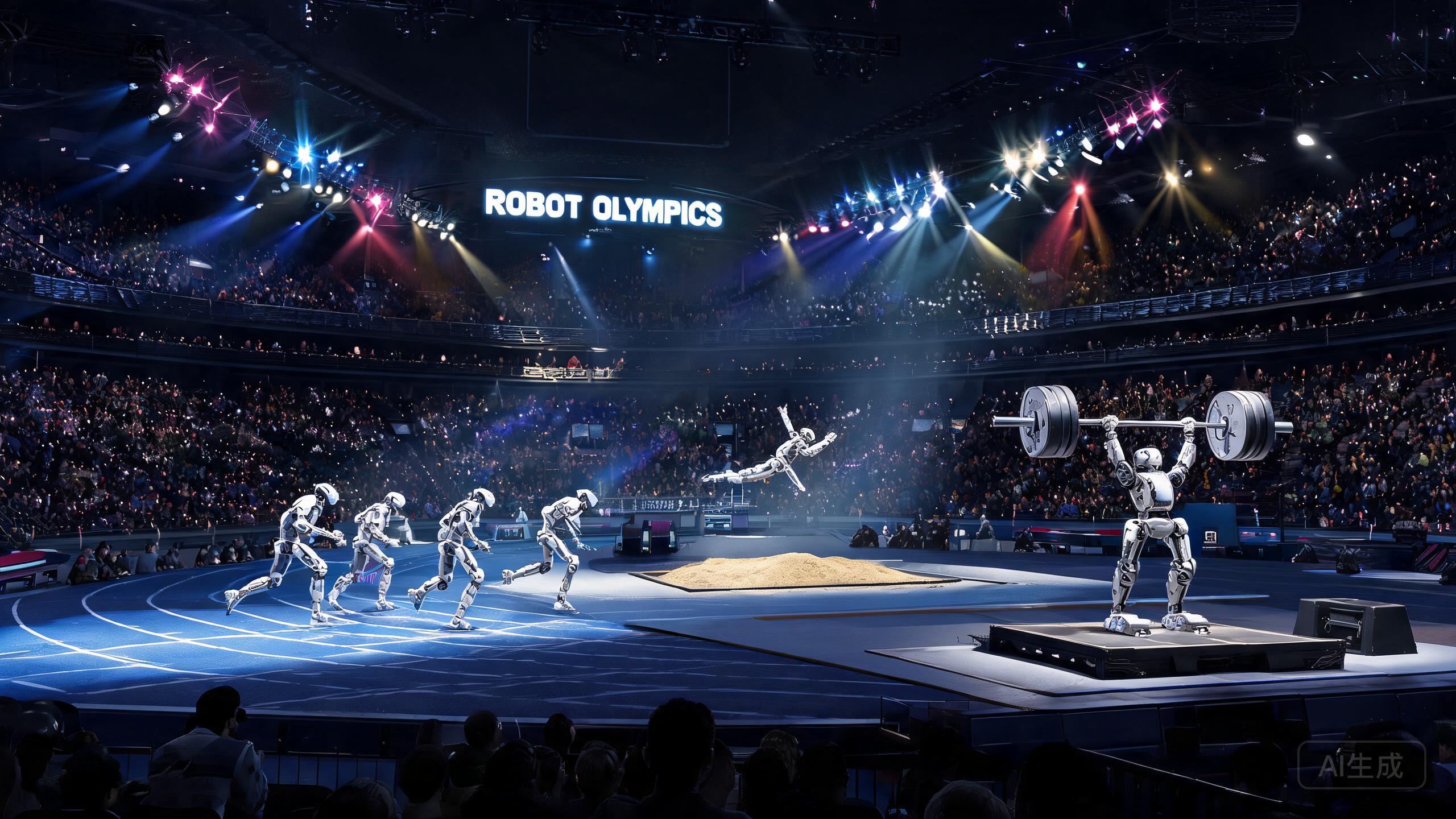
The 2nd World Humanoid Robot Games (WHRG 2026) officially opened in Beijing on August 22, 2026, co-hosted by the Beijing Municipal Government, China Media Group, the World Robotics Cooperation Organization, and the Asia-Pacific Robot World Cup International Council. Scene-based competitions began earlier on August 16.
This year's games saw participation from 666 teams across 16 countries — a 138% increase from the inaugural edition — with 2,056 robots, quadruple the first edition's count. International teams came from the United States, Germany, Japan, Brazil, and other nations. Brazil assembled five Robot Cup teams into a national squad. Domestically, 157 companies, 200 universities, and research institutions fielded 641 teams with 1,975 robots.
The event expanded from 26 to 51 competitions: 30 athletic events and 21 scenario-based challenges, totaling 1,301 matches over 5 days. New athletic events include long jump, weightlifting, tug-of-war, and table tennis, each testing the limits of robot body structure and core components. Martial arts and sports dance were elevated to competitive events.
Scene-based competitions extend into real-world environments, covering industrial, hotel, household, and logistics scenarios. A dedicated dexterous hand challenge includes assembly feeding, domestic service, fire rescue, and book organization — all targeting 'tedious, dirty, dangerous, and difficult' scenarios. In a hotel guest-service event, robot teams must handle luggage transport, room restocking, and bed-making within 30 minutes.
The organizing committee built a cross-brand, cross-model embodied intelligence robot management platform to achieve unified management of diverse robots. The event also features a 'Robot Street' with intelligent retail and VR experiences. Competition rules formed during the games are expected to evolve into practical technical acceptance standards, realizing the goal of 'defining standards through competition, promoting production through standards.'
Robots that master these last-meter skills can win orders with medals and enter the workplace straight from the arena.
— Jiang Guangzhi, WHRG Organizing Committee