Figure AI Unveils Helix 2.5: Zero-Shot Whole-Body Autonomy Across 30 Unseen Homes
On September 17, 2026, Figure AI introduced Helix 2.5, its most advanced neural network for humanoid robots. Trained on Figure's Index dataset — a global-scale human behavior dataset with 500,000 creators and 16 million videos — Helix 2.5 demonstrated zero-shot whole-body autonomy across 30 real Bay Area homes, performing three long-horizon behaviors: tidying living rooms, folding towels, and making beds. Zero-shot success rate reached 56%, compared to a 9% baseline without Index pretraining — a more than 6x improvement. This is believed to be the first demonstration of zero-shot whole-body generalization at this scale on a humanoid robot, marking a critical milestone toward robots that can work in any home without prior training.
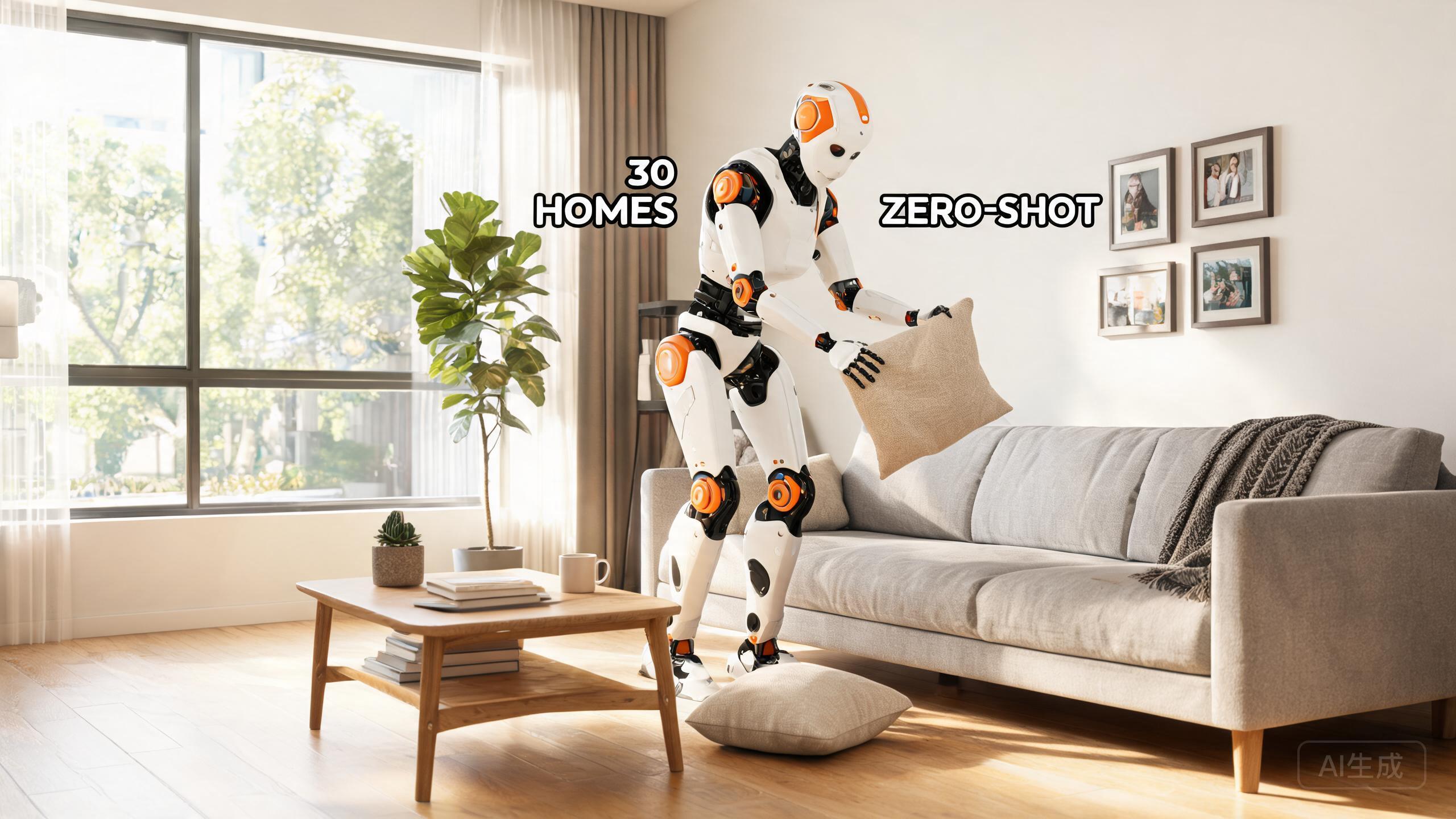
On September 17, 2026, Figure AI announced Helix 2.5 — the most advanced neural network the company has built for its humanoid robots. The breakthrough demonstration answers a fundamental question in humanoid robotics: can a robot enter a completely unfamiliar home and immediately get to work, using its whole body, without any prior data collection or fine-tuning in that environment? Figure's answer is a qualified yes, with Helix 2.5 achieving a 56% zero-shot success rate across three household tasks in 30 unseen homes.
The experiment was designed to test generalization rigorously. Figure pretrained Helix 2.5 on Index — the company's global-scale dataset of human behavior, featuring 500,000 content creators and 16 million videos of humans performing everyday tasks. From that single foundation model, the team derived three distinct whole-body behaviors: tidying living rooms, folding towels, and making beds. They then deployed the robot in 30 different Bay Area homes with zero data collected in any of those homes — no mapping, no fine-tuning, no adaptation period. The robot simply walked in and started working.
The results are striking. Zero-shot success across all three tasks averaged 56%, compared to just 9% for a control model trained from scratch without Index pretraining — a more than 6x improvement. To put this in context, Figure's Helix 02 system, which was state-of-the-art earlier in 2026, required extensive data collection in each specific environment where it operated. Helix 2.5 eliminates that requirement, suggesting that the model has learned genuinely generalizable representations of how humans interact with physical spaces and objects.
The single foundation model approach is also significant. Rather than training separate models for each behavior, Figure adapted one Index-pretrained base model to three tasks spanning locomotion, rigid object manipulation, deformable object manipulation (towel folding), bimanual coordination, and active perception. This suggests that as the Index dataset grows and the foundation model improves, it should be possible to add new behaviors with diminishing marginal effort — a key scaling law for humanoid robot intelligence.
While 56% success is far from perfect and nowhere near human-level reliability, it represents a meaningful threshold: the robot succeeds more often than it fails in completely novel environments. According to Figure, this is the first demonstration of zero-shot whole-body generalization at this scope on a humanoid robot. The company frames Helix 2.5 as evidence that large-scale human behavior data is the key to unlocking general-purpose humanoid robots — and that the Index dataset's growth curve will continue to drive rapid capability improvements in future Helix iterations.
A person can walk into an unfamiliar home and start working immediately. We do not need to relearn how to make a bed because it is a different height. This is currently not true for robots — but Helix 2.5 changes that.
— Figure AI / Helix 2.5 Announcement
Related Robot
Figure 03
Figure AI
Related News
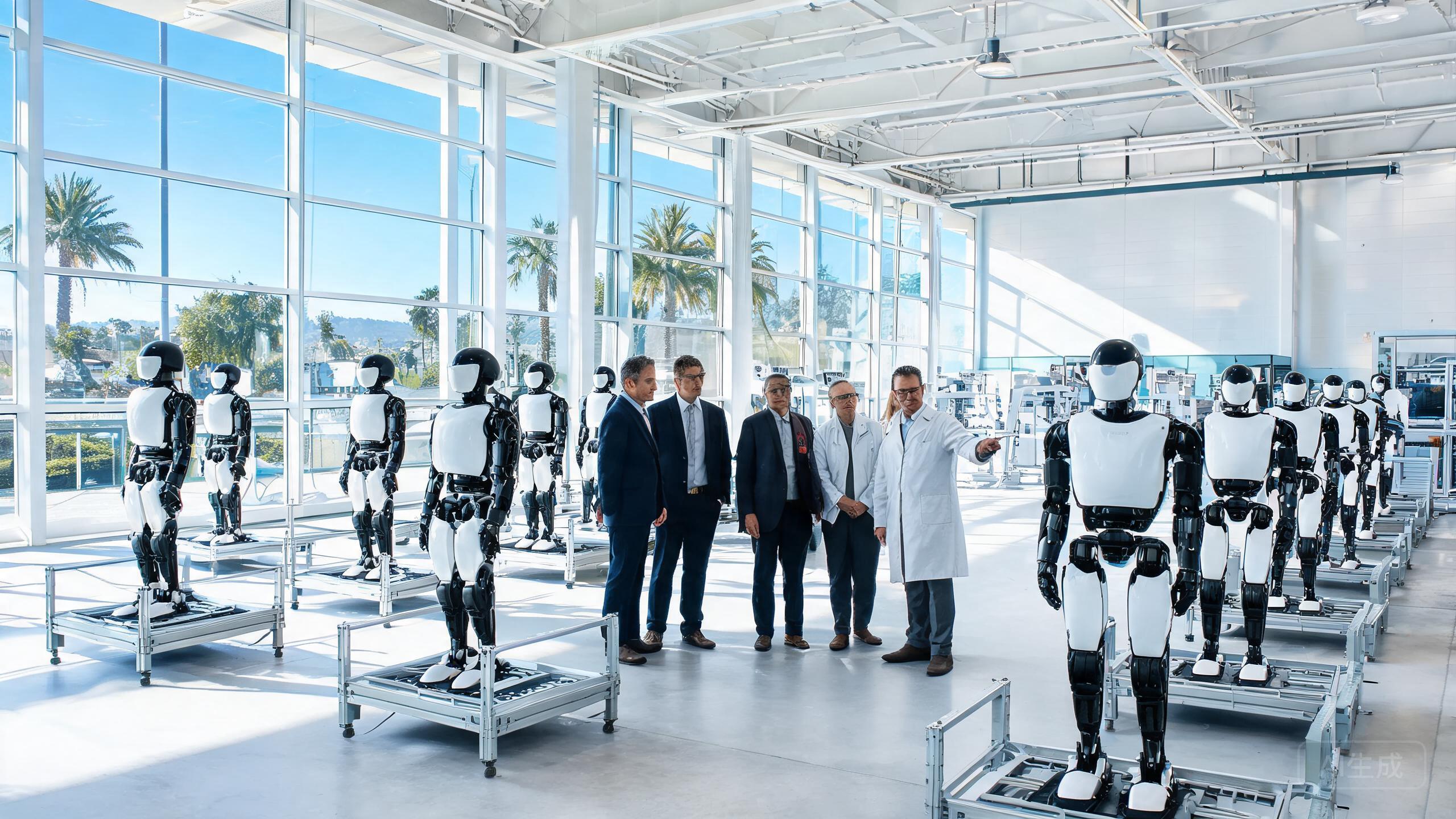 Figure AI / Bloomberg
Figure AI Raises $2.2B Series D at $42B Valuation to Scale BotQ Humanoid Production
Figure AI closed a $2.2 billion Series D on November 13, 2026 at a $42 billion post-money valuation, led by Parkway Venture Capital with participation from NVIDIA, Intel Capital, Samsung and Bezos Expeditions. The round is more than 16× the company's $2.6 billion valuation from early 2024 and will fund expansion of its BotQ factory, a new actuator line, and training compute for Helix 3.0.
 NVIDIA / Humanoids Daily
Figure AI Joins NVIDIA's Open Agent Safety Platform for Humanoid Standards
In late September 2026, Figure AI joined NVIDIA's Open Agent Safety Platform, an industry-wide initiative to establish standardized safety protocols for AI-powered robots and agents. The platform — which also includes companies like Boston Dynamics, 1X, and Sanctuary AI — aims to prevent a fragmented safety landscape as humanoid robots begin operating alongside humans in factories, warehouses, and homes. Shared safety benchmarks and testing frameworks are expected to accelerate deployment while maintaining public trust.
 IT之家 / Figure AI
Figure Releases Helix 2.5: Humanoid Robots Autonomously Clean 30 Homes with Zero Training
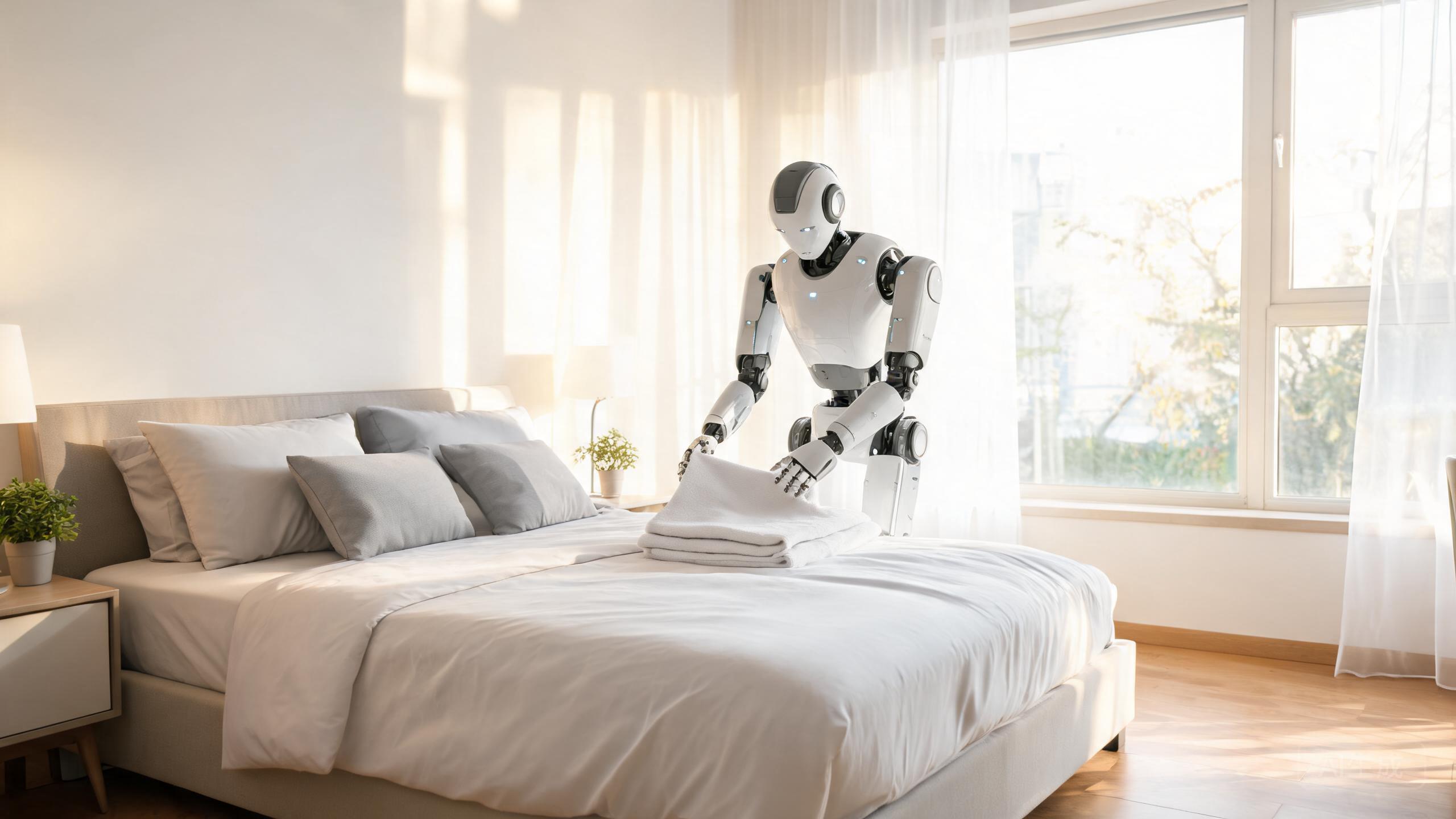
On September 18, 2026, Figure AI released Helix 2.5, a new foundation model enabling humanoid robots to autonomously perform housework — tidying living rooms, folding towels, and making beds — in completely unseen environments. Figure rented 30 houses in the SF Bay Area and sent robots in with zero prior data collection. Index pre-training boosted zero-shot task success from 8% to 56%, and Halve the task-specific data needed compared to Helix 02.